Radar_City-Sadness-1_Courtesy-of-Curzon-Artificial-Eye

Der Vorspann, helle Schriftzeichen auf dunklem Untergrund. Aus dem Off hört man die Kapitulationsrede des japanischen Kaisers. Eine Aufblende wie das Licht am Ende des Tunnels in Lien Lien Fung Chen (Liebe wie Staub im Wind, 1987). Das erste Bild erscheint wie beim langsamen Sichtbarwerden eines Fotoabzuges im Entwicklerbad. Ein korpulenter Mann Wen Xiong (der älteste von vier Brüdern einer taiwanesischen Familie, der betet und Räucherstäbe anzündet. Diffuses Licht. In einem anderen Teil dieser Wohnung eine Frau, die unter Schmerzensschreien ein Kind zur Welt bringt. Gesprächsfetzen, die Schreie der Frau. das geräuschvolle Schlurfen Wen Xiongs. Irgendwann wird der Strom eingeschaltet, eine Stubenlampe leuchtet auf. Mit fast ritueller Sorgfalt krempelt der untersetzte Mann den Lampenschirm hoch und verläßt den Bildausschnitt. Die Lampe und ein Teil dieses Raumes. Menschenleer. Die menschlichen Stimmen von außerhalb der Kadrage gehen allmählich in ein elektronisches Dröhnen über, welches von weit außerhalb des Raumes und der Zeit herzukommen scheint. Dann der zweite Teil des Vorspanns, symphonische Synthesizermusik, der Bruch zwischen der Zeit, von der Beiqing Chengshi erzählt (die ersten Jahre nach dem Zweiten Weltkrieg) und der Zeit eines Kinos in den Neunziger Jahren. Man könnte auch von dem Geräusch der Zeitmaschine Kino reden, die uns zeitlich und räumlich aus der Gegenwart heraus und wieder zurückführen wird.

Die Familie Lin bei der Vorbereitung eines Festes. Wen Liang, der dritte Bruder wird aus dem beendeten Krieg zurückerwartet. Der Blick in ein Zimmer, verengt durch Interieurs. In der verengten Kadrage das geschäftige Treiben der Personen, der Vater, der Opfergeld verbrennt, die Frauen, die den Haushalt besorgen. Gesprächsfetzen, die sich mosaikartig zu Informationen zusammensetzen. Oft treten die Personen aus dem Bildausschnitt heraus und wieder hinein, aus dem winzigen sichtbaren Teil des Raumes in den imaginären.

In den längsten Einstellungen des Films bleibt die Kamera meistens starr. ein Blick, der aus sicherer Distanz beobachtet. Personen, die essen, trinken oder reden. Szenen, die das dramatisch bewegende Sujet wieder unterwandern. Die Vergänglichkeit der Menschen und der Dinge in bis zu dreiminütigen Plansequences in kleinen Ewigkeiten festgehalten. Zu Beginn des Films treffen sich Intellektuelle in einer Bar. Irgendwann stimmen sie dann in ein nostalgisches Lied ein. Einer von ihnen öffnet das Fenster im Hintergrund der Bildmitte, ein blaues Quadrat, in das der Blick in die Tiefe nach „außen“flüchten kann. Die Befreiung des Blicks aus dem Eingeschlossensein eines begrenzten Raumes. Kein Hinweis, daß einer der Personen, Hinoe, im Laufe des Filmes. eine gewichtige Rolle spielen wird. Ein Schnitt, der die Tonspur aber nicht abbrechen läßt, auf eine gebirgige Landschaft, die von Leitungen wie von Schienennetzen durchzogen ist. Die Montage, die nicht den Sinn baut, sondern Möglichkeiten anbietet im Verlaufe des Films Verknüpfungen im eigenen Kopf vorzunehmen.

Der Gang eines Krankenhauses: Das Bild durch Säulen und Mauern doppelt gerahmt, verkleinert den Raum, in dem sich die Akteure bewegen auf die Hälfte des Filmformates. Der Blick kann wieder flüchten bis zum Eingang des Krankenhauses, wo das Tageslicht und die Grünanlagen die Freiheit versprechen. Diese Einstellung kehrt mehrmals wieder, vermutlich sogar in identischen Einstellungsgrößen. Einmal nach den ersten blutigen Unruhen versammelt sich eine Menschenmenge in dem ohnehin schon verengten Bildausschnitt, Ärzte und Krankenschwestern, die Verletzte behandeln oder durch die Räume tragen. Die ganze Welt scheint sich auf dieses kleine Stückchen Raum reduziert zu haben. Es ist Nacht. Kein Licht am Ende des Tunnels.

Ein Treffen von Oppositionellen in den Wohnung Wenqings, des jüngsten, der vier Brüder. Seit frühester Kindheit ist er staubstumm. Während sich die anderen unterhalten, beschäftigen sich Wenqing und die Krankenschwester Hinomi miteinander. Obwohl im selben Raum mit den anderen, nur Zentimeter von deren Tisch entfernt, dominiert hier für einen Moment die Geschichte zwischen diesen beiden Figuren. Von einem Plattenspieler hört man das Loreley-Lied „Ich weiß nicht, was soll es bedeuten.“ Die Kommunikation zwischen beiden ist beschränkt auf das Austauschen von kleinen Zettelchen, die als ausgedehnte Zwischentitel wie Referenzen an den Stummfilm auf der Leinwand erscheinen. Schriftlich erzählt Hinomi dem Stummen die Geschichte des Loreley-Liedes. Eine intime Szene einer sich entwickelnden Liebesgeschichte, die gleichermaßen Aufmerksamkeit beansprucht, wie die Hinweise von Morden, Unruhen und der Auseinandersetzung zwischen der KMT-Regierung und der Untergrundbewegung. Inmitten einer Zeit der Angst, lange lyrische Sequenzen, wie kleine Inseln, zu denen man gelegentlich flüchten kann.

Die Vielfalt der Sprachen; Mandarin, verschiedene Akzente, unter ihnen der, den die TaiwanesischenUreinwohner sprechen und auch japanisch, die Sprache der ehemaligen Besatzungsmacht ist zugleich auch eine Krise der Verständigung. Die Untertitel versuchen daher nicht nur für Europäer dieses Wirrwarr zu ordnen. Auf der anderen Ebene, Inserts, Zwischentitel, aus dem Off gesprochene Briefe und Tagebuchaufzeichnungen. Die Frauen, fast bar jeder Macht und jeden Einflußes sind denoch die eigentlichen Chronisten. Die propagandistischen Radioansprachen der Regierung werden mit den persönlichen Reflexionen der Frauen konfrontiert. Die offizielle Geschichte und die Stimmen derer, die später in der Geschichtsschreibung verstummen werden. Die gesprochene und geschriebene Sprache als Chaos oder als Versuch zu ordnen, die ihre Grenzen offenbart und auf nichtverbaler Ebene ihre Entsprechung in Blicken und Gesten findet. Die exaktesten historischen Exkurse über dieses Sujet müssen zwangsläufig scheitern. Beiqing Chengshi ist unter anderem auch ein Film über die Sprache, die versucht zu benennen und über die Dinge, die für sich selbst sprechen.

Der stumme Wenqing wird verhaftet. Von außen durch die Gefängnistür und Gitter halb verdeckt, eine kleine schweigende Gruppe von Gefangenen, denen man auf den ersten Blick kaum Todesangst ansieht. Emotionen, die sich allenfalls erkennen lassen in der sorgfältigen Betrachtung der Gesten, die sich manchmal nur auf banale mechanische Funktionen der Gliedmaßen reduzieren. Ein Name wird aufgerufen. Körper, die sich zum Abschied umarmen, von denen manchmal nur die Rümpfe zu erkennen sind. Fragmente einer Tragödie, die sich im Nichtsichtbaren abspielt. Die Tür, die den Blick in die Zelle bricht wird geöffnet, ein Mann abgeführt. Kurze Zeit später fällt ein Schuß. Wenqings Name wird aufgerufen. Ein Blick auf seine Mitinsassen zeigt ihm, daß er gemeint ist. Wieder wird die Tür geöffnet, Wenqing abgeführt. Sie führen ihn durch einen langen Gang, der eine Unendlichkeit in die Tiefe des Bildes zu ragen scheint. Die Kamera bleibt starr, folgt ihnen nicht. Ganz am Ende des Ganges wird eine Tür geöffnet und wieder geschlossen. dann die Leere des unendlichen Ganges. Was bleibt ist die Ahnung der unaussprechlichen Angst, eine namenlose Drohung. Kein Licht am Ende des Tunnels.

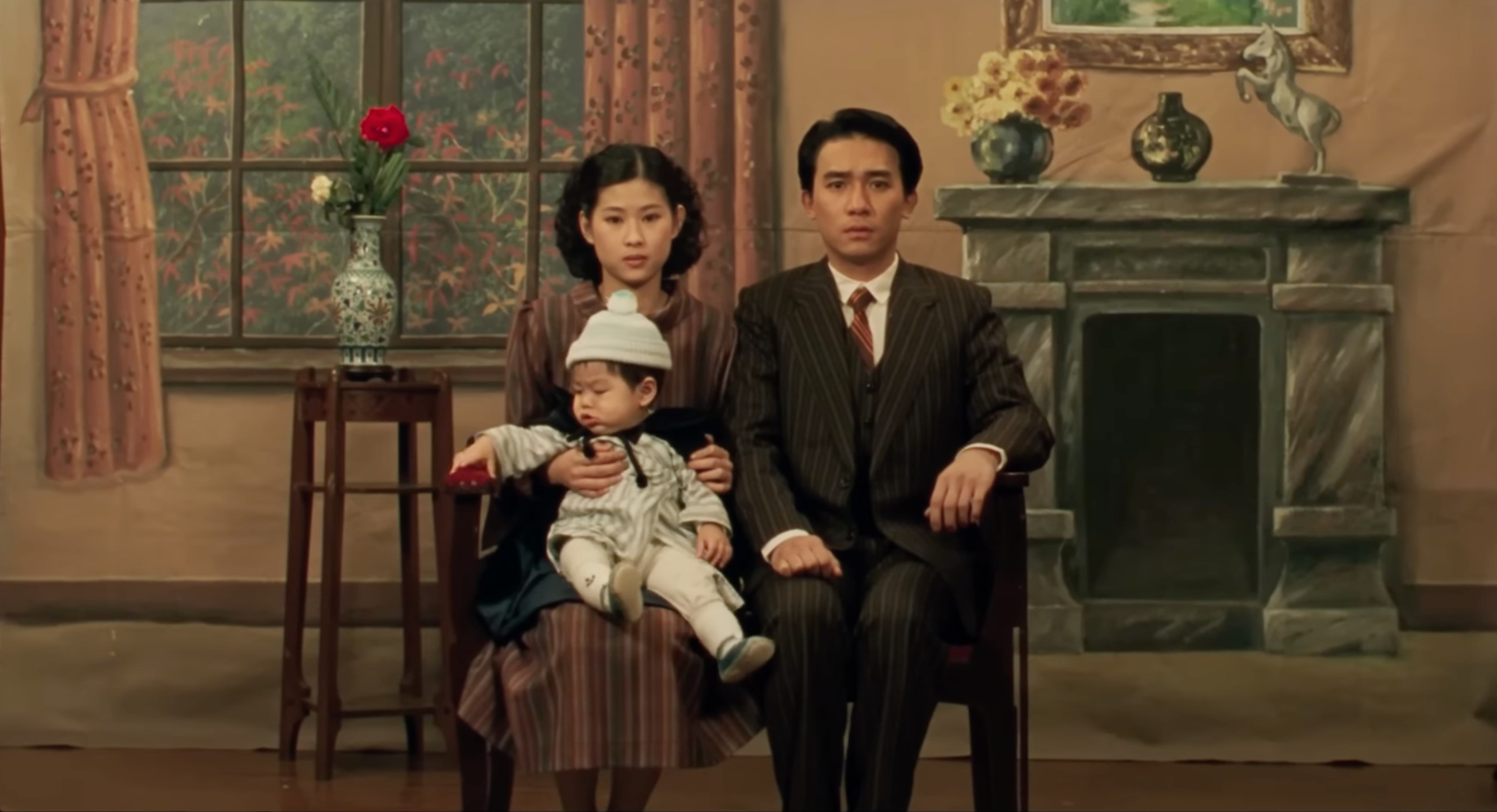
Wenqing, durch seine Stummheit mit der Welt nur visuell in Verbindung stehend, ist Fotograf. Wie seine tagebuchschreibende Freundin ist auch er ein Chronist jenseits der offiziellen Geschichte. Mehrmals sieht man ihn bei der Betrachtung oder Retouchierung von Fotografien auf einem Lichtpult. Seltsame, durch das Licht verfremdete winzige Chimären, sepiafarbene Phantomwesen außerhalb der Zeit. Der ganze Film ist weit entfernt von einer spektakulären Familiensaga, eher ein überdimensionales Familienalbum. Jedes Bild ein Zeugnis von der Präsenz der Menschen und der Dinge. Jedes Bild hat seine eigene fragmentierte Geschichte. Beiqing Chengshi ist einem Film wie Ozus Bakushu näher als beispielsweise Xie jins Furong Zhen (Die Stadt Hibiskus, China 1988). Vermutlich völlig unabhängig von Ozu, die gleiche tiefe Suche nach der Bestimmung des Kinos und dessen Basis, das fotografierte Bild. Die Personen erleiden nicht nur Geschichte, sondern sind sogar bestrebt, sie festzuhalten oder aufzuzeichnen, vielleicht sogar in dem Bewußtsein ihrer eigenen Vergänglichkeit. Die Fotografie des ermordeten ältesten Bruders, welches auf der Beerdigung von seinen Angehörigen getragen wird, der Versuch zumindest einen winzigen Teil des Lebens aus der Zeit zu nehmen und über den Tod hinaus zu erhalten. Eine der letzten Szenen, die mir auf merkwürdige Weise Andre Bazins Aufsatz Ontologie des photografischen Bildes ins Gedächtnis ruft: Wenqing vor dem Spiegel beim Einbalsamieren seiner Haare mit nahezu ritueller Feierlichkeit. Hinomi und ihr gemeinsames Kind sitzen bereits in einer Pappdekoration mit gemaltem Kamin, gemaltem Fenster, gemalter Vase. Nichts Lebendiges. Eine künstliche Idylle, der verzweifelte Versuch dem Traum von einem beseren Leben, außerhalb der Wirklichkeit (außerhalb des Diesseits ?) Gestalt zu verleihen. Das Klicken des fotografischen Selbstauslösers. Das Bild friert ein, die Haltung der Personen gleicht fast denen von Mumien. Aus dem Off die Stimme Hinomis, die in einem Brief mitteilt, dieses Foto sei drei Tage vor der Verhaftung Wenqings gemacht worden. Wenqing habe darauf bestanden, seine Arbeit beenden zu können. Seit Tagen hat sie nichts mehr von ihm gehört. Unausgesprochen bleibt die Gewißheit, daß Wenqing inzwischen hingerichtet wurde.

Bilder, Szenen, die sich nicht einfach summieren. Szenen, die manchmal wie streng abgeteilte Räume eines Gebäudes wirken und die von der Montage nicht einfach zu einer Geschichte verbunden werden. Vielmehr eröffnet die Montage zahlreiche Kombinationsmöglichkeiten diese fragmentierten und manchmal nur angedeuteten Episoden mit Hilfe der eigenen Vorstellungskraft zu vervollständigen. Wenige Rückblenden, aus dem Off gesprochene Tagebuchtexte, wie kleine unterirdische Gänge, durch die man sich einen Weg bahnen kann, von einem Stück Geschichte zum nächsten. Die „Geschichte“, die man durch Inhaltsangaben erfährt, zefällt wie bei einer Zellteilung in viele verschiedene, die ihre Souveränität gegenüber dem Hauptplot behalten, auch wenn sie sich dennoch miteinander verknüpfen lassen: Die Geschichte von Wenliang, dem dritten Bruder, der bereits als seelisches Wrack aus dem Krieg zurückkehrt, in den ihn die japanischen Besatzer gezwungen haben, der aufgrund seiner Labilität in Gangsterkreise gerät, als Kollaborateur verhaftet wird und in den KMT-Gefängnissen zum körperlich und geistigen Krüppel geschlagen wird. Der Rest seiner Identiät, das verbotene Naschen von halb verfaulten Opfergaben. Unter anderem geht es auch um die Geschichte Hinomis, Wenqings und ihrer Liebe, die Geschichte einer Familie, welche die KMT-Regierung als Fortsetzung der japanischen Okkupation erleidet. Sogar der zweite Bruder (ein Arzt), der gar nicht erst aus dem Krieg zurückkehrt, ist in kleinen Geschichten präsent. Seine Frau, in der irrationelen Hoffnung, er werde dennoch zurückkehren, desinfiziert regelmäßig seine Instrumente. Es sind die Geschichten der Namenlosen, die in die Geschichtsbücher keinen Zugang haben. Geschichten wie Splitter eines zerbrochenen Glases. Faccetten von Menschenleben, die für einen Moment die Vielschichtigkeit einer Person durchscheinen lassen. Der Tod des ältesten Bruders, ein Häftling, der zur Hinrichtung geführt wird oder eine Messerstecherei mit tödlichen Folgen. Kurze häßliche Szenen, ohne Pathos die banale Ungeheuerlichkeit des Todes. Jede dieser Personen, ein kleines Universum für sich, jeder Tod ein kleiner Weltuntergang.

Das letzte Bild. Wie zu Beginn, ein menschenleerer Raum, ein Fenster und eine Vase. Ein Stilleben. Die Starrheit der leblosen Dinge gegenüber dem bewegten und vergänglichen Leben der Menschen. Das Kino wieder an seinem Ausgangspunkt, der Fotografie. Dann eine Abblende, die den Raum wieder schließt, den die Aufblende am Anfang geöffnet hatte. Der Nachspann, ein traditionelles Kinoritual, die Schriftzeichen wie Hiroglyphen auf dem Tor zu einem Raum, der sich öffnet und wieder schließt, in dem man nr Beobachter ist und in dem doch für 160 Minuten die Menschen und die Dinge auf nahezu unheimliche Weise präsent waren. Es gibt Filme, die kann man nicht so einfach nacherzählen, sie sind wie Räume, in denen man für einige Zeit gewohnt haben muß.

Rüdiger Tomczak (Erstdruck in Journal Film, Freiburg im Breisgau, Sommer 1991)

cityofsadness

The Passenger-Image-01

by Andrea Grunert

There are films one cannot forget. One that has continued to haunt me since I first saw it is François Rotger’s The Passenger (France/Canada/Japan, 2005). Living in Germany, where it had no theatrical release, I discovered the film only three or four years ago while doing research on the Japanese actor-director Yūsuke Iseya, who plays the leading role.

Violence and alienation in modern society
The Passenger was Rotger’s directorial debut (1) and the film was shot in three languages – Japanese, English and French – with the action set in Japan and Canada. Kohji (Iseya) is sent to Canada by the yakuza Naoki Sando (Yōsuke Natsuki), his mission being to kill Tanner (François Trottier), Sando’s Canadian business partner. Sando has stolen the yakuza’s gang’s takings from dog races, has put the blame on Tanner, and therefore needs to silence him to cover up his misdeed. Three years earlier, Sando surprised Kohji in bed with his daughter Hiroko (Kumi Kaneko), and Kohji is eager to fulfil the task in order to regain the elderly man’s favour.
Yakuza – members of the organized crime syndicates in Japan – play an important part in the film, but it is concerned less with their criminal deeds than with alienation in modern society, exploring human feelings and dealing with topics such as violence and vulnerability. However, The Passenger is not a psychological study either, instead making powerful use of mise en scène and editing devices to depict strong emotions and create disturbing moments.
The film’s parallel structure, sequences in Canada alternating with others in Japan, indicates just how closely the human destinies are intermingled despite the geographical distance. The relationship between Kohji and Hiroko is revealed through flashbacks giving glimpses of memories the two young people have of their lovemaking and shared moments of tenderness. Hiroko’s longing for her lover is expressed when her voice from the off accompanies shots of Kohji in the corridor of his hotel in Montreal. For Kohji, her voice is the acoustic materialization of a phone call that the young man now recalls visibly lost in thought. This dissociation of image and sound, which is also one of space and time, is a reminder of the geographical distance but also of the strong bond between the two lovers.
Disconnecting image and sound is used in The Passenger as a means to create fragmentation. Flashbacks and cross-cutting are also used to disrupt linearity, while abrupt cuts result in mere allusions. The viewer cannot always immediately make a connection between the shots and the action. In one of these shots, Tanner’s ex-wife Viv (Gabrielle Lazure), is sitting at a desk and framed in a side view. It is not until later in the film that the significance of this very brief image is revealed, and this is done in a longer sequence in which Viv is filmed in the same position and from the same angle. This is just one example of the many shots or short sequences which, at first glance, do not seem to be plot-related and therefore interrupt the narrative flow. However, by contributing to the film’s fragmented and allusive style, they imbue The Passenger with unsettling moments.
Although shot in three languages, The Passenger is a film with astonishingly little dialogue. Except for Hiroko’s long monologue at the end, the characters are anything but talkative. Kohji in particular is practically silent, contributing very little to the film’s dialogue. One explanation could be the fact that he has only a basic knowledge of English and none at all of French, but there is more to his uncommunicative behaviour than a lack of ability to express himself in a foreign language.
The relative silence that he and other characters maintain points to lack of communication as one of the film’s central tropes. In Kohji’s case, silence is accompanied by defiant body posture, expressing resistance and mistrust. Hiroko’s voice – the phone call in which she tells him that her father will forgive him if he kills Tanner – offers him a glimmer of hope. Not unlike Kohji, Hiroko, who is a student at high school, lives in a world of her own, refusing to tell her father about her relationship with Kohji and maintaining a distance between herself and her classmates. Instead of using words, many of the characters – for example Akira (Ryō Kase), the young nephew of a yakuza boss – resort to violence. In the first sequence in which he appears, Akira is shown battering a man frantically with a plastic bag containing a stone. This beating is filmed in a general shot with the characters – Akira, his victim and Akira’s three henchmen – tiny figures in the background. However, this distant framing does not diminish the extreme brutality of the killing. Akira is depicted as an aggressive adolescent who visibly enjoys violence. Violence is his way of compensating for a lack of maturity – his youthful smile giving him an air of innocence when he drives Hiroko home. Buoyed up by her friendly attitude, he suddenly changes his behaviour, starting to race around in circles on an empty site in an industrial estate. However, both seem to enjoy the wild ride, revealing their youthful desire for freedom.
Despite several scenes of great brutality, violence is predominantly latent, emanating from the body language of the characters and also from the hostile environment depicted in both Japan and Canada, and reinforced by a feeling of constant tension created by cinematic means. Abrupt movements within the image and frequent shifts from static shots to rapid movement create moments of shock, for example when Kohji, earning money as a male prostitute, is shown with a client in the hotel room in Canada, both undressing slowly. A hard cut emphasizes the movement with which the young Japanese is suddenly and brutally pinned against the wall, where his client takes him from behind.
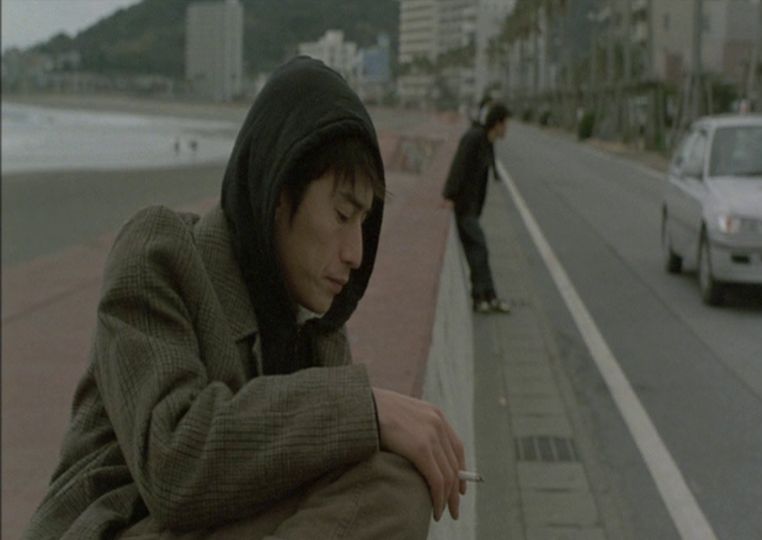
In a previous sequence, still set in Japan, several young men with Kohji among them are waiting on a beach promenade when a car stops to pick up Kohji, suggesting that he makes a living by selling his body. In a different sequence, Kohji and other homeless men are sleeping in the street. No explanation is offered for this life in misery except for the fact that he has fallen from favour with his mentor Sando. However, his situation hints at the problems facing many Japanese young men who were left with no career prospects after the end of the bubble economy in the early 1990s, an economic decline that continued into the early 2000s. It was especially young people like Kohji who were hit by the problems of unemployment and a general lack of orientation.

Hostile environments and human bodies
Kohji’s search for Tanner in a country unknown to him is also a quest for identity by a disoriented youth. However, alienation affects not only young people such as Kohji and Hiroko, with Viv also trapped in a world marked by solitude and despair, and the film’s dehumanized bleak urban and suburban environment is an indication of loneliness in the modern world. Kohji and other characters too walk and drive along empty streets, and several scenes take place on industrial sites devoid of any human presence, their ugliness intensifying the film’s gloomy atmosphere. The modern-looking residential area where Viv lives has stylish houses but looks similarly lifeless, with no sign of other inhabitants or of vegetation. The light grey colour of the buildings, all of them outwardly identical, is in keeping with the film’s strongly reduced colour palette, as is the greyness and cold blue of the snow-covered countryside. The barren wintry landscape in Canada is a hostile environment in which Kohji, a small human figure filmed in a general shot, fights his way through the snow. Numerous nocturnal scenes reinforce the feeling of oppression – the light reflected by the snow creating an eerie atmosphere.
Deepening the visual impression, Rotger depicts modern society as an inhospitable place, with the silence that dominates long stretches of the film intensifying its persistent tension. Music – mainly non-diegetic – is used sparingly. A haunting tune that accompanies the first sequence recurs later at several points as a fitting reinforcement of the film’s disturbing atmosphere.
Communication in the film is a physical matter involving the human body through violence and sexual intercourse. Kohji has sex with his girlfriend and with his client in the hotel. He also has sex with Viv, depicted as a lonely and frustrated divorcee living in a house as empty and sterile as the residential area in which it is located. The middle-aged Viv, afraid of getting older, is obsessed with her body, torturing it in the fitness studio and undergoing beauty surgery. Kohji seems to give her hope – in a conversation with her former husband, she says that she has a new lover. However, for Viv and also for Tanner, love is an illusion. His new girlfriend is 23 years old, and after making love to him, she takes all the money from his wallet and leaves. Kohji’s interest in Viv is mainly a ruse to help him find Tanner. However, he does give her a moment of happiness brief though it may be.

No escape from the self
Communication, often non-verbal, is also conveyed by the eyes, for example when Kohji sizes up Viv or the tender expression on his face while caressing Hiroko. When Akira tries to kiss Hiroko, the young woman resists, and angered by her rejection, he pushes her violently, causing her to stumble and fall onto a table with a glass top, which shatters. Covered in blood and in great pain, she stares at Akira, her face expressing a mixture of feelings – confusion, fear, pride.
The film depicts not only moments of violence and aggression but also moments of tenderness. Kohji and Hiroko kiss in a field of pampas grass bathed in the warm yellowish colours of a summer day. In Japanese culture, pampas grass is related to death and this scene thus seems to forebode the tragic events to come. Alternating editing shows Akira shooting Hiroko dead while Kohji, unaware of the man’s innocence, strangles Tanner underwater in the latter’s private swimming pool. This cross cutting links violence and love, suggesting that when Kohji fulfils his murderous mission, he is at the same time losing the woman he loves. This close connection between love and death is also created via colours and lighting, the bluish water of the swimming pool contrasting sharply with the scene in the field of pampas grass in the bright sunlight. In both sequences, the characters are naked, and the underwater killing resembles an embrace between killer and victim, two lonely souls locked together in an underwater dance of death.
In both Japanese and Western culture, water is richly symbolic, signifying among other things purity, renewal and the flow of life. The idea of impermanence with which water is associated in Buddhist thinking permeates the whole film. A shot in one of the final sequences again shows Kohji and other male prostitutes waiting for clients on the deserted beach promenade under a leaden sky. A few moments later, another single shot shows the same location, now devoid of all human presence, as if pointing to the transient nature of existence, something that Hiroko also refers to in her long monologue, for which she is filmed in front of a black background, like a ghost talking from the realm of the dead.
The sequence with Kohji and Hiroko in the field of pampas grass creates an impression of innocence and vulnerability, and frequent shots of Kohji struggling in the cold of the Canadian winter also contribute to the image of a vulnerable and lonely young man, magnificently supported in these shots by Iseya’s strong performance. For Kohji and other characters in the film, the fragility of human existence is a symptom of their desire to be loved, a desire that remains unfulfilled for the lonely Viv as well as for the two young Japanese.
Kohji, lied to by Sando, is a pawn in a network of intrigues and betrayals. However, he is not depicted simply as a victim but also as a clever and resourceful person in a foreign country and with scarcely any knowledge of the language who manages to track down his prey. He is perfectly capable of adapting to new conditions and to surviving, defying the extreme cold and fighting his way – “fighting” being here the most appropriate term – through a hostile environment. He steals a car, breaks into the industrial premises that Tanner uses for his business, gains Viv’s confidence and steals a fax Tanner has sent her on which he finds the important information about Tanner’s whereabouts. Brutally beaten by Tanner’s henchmen and submitting to violent sex with his client, Kohji not only receives violence but also distributes it. He shoots at Tanner’s men and gives a vengeful hard kick at the bed of his sleeping client before leaving the hotel room. This is the rather childish reaction of a young man, someone who nevertheless acts like a professional criminal and cold-blooded killer. After he has murdered Tanner, Kohji is seen kneeling on a frozen lake and drinking from a hole he has dug in the ice. Filmed in a general shot, he is a tiny figure in the vast expanse of the snowy landscape – the final image of a lonely survivor.

Notes
(1) François Rotger, born in France, established himself as a fashion photographer and director of music videos. After making several short films, he wrote and directed The Passenger, which premiered in 2005 at the Locarno Film Festival. Story of Jen, his second feature film and for which he also wrote the soundtrack, was released in 2008.

The Passenger-Image-02

Kiyosu-Image-01

by Andrea Grunert

Mitani Kōki’s (1) The Kiyosu Conference (Kiyosu Kaigi, Japan, 2013) deals with history in a highly entertaining way, nevertheless giving the viewer the opportunity to reflect on human behaviour and the relationship between history and modern politics.

The film and its historical context

The conference held at Kiyosu Castle (2) in July 1582 is a crucial event in Japanese history. Its purpose was to discuss the matter of succession in the Oda clan and the redistribution of its territories after the death of Oda Nobunaga (1534-1582). One of the most powerful warlords of his time and considered in Japanese history to be the first of three unifiers of the country after more than a hundred years of civil war, Nobunaga was either killed or committed seppuku when attacked by Akechi Mitsuhide, one of his vassals, while he was resting at the Buddhist Honnō-ji Temple, his headquarters in Kyoto. That same night, his oldest son and designated heir Nobutada (1557-1582) also died when attacked by Akechi’s men. Hashiba Hideyoshi, another of Nobunaga’s vassals, avenged his lord’s death and defeated Akechi’s troops at the Battle of Yamazaki two weeks after the attack on Honnō-ji Temple.
Following these events, Nobunaga’s vassals and their retainers were summoned to Kiyosu Castle, the clan’s former residence. At this conference, held a month after Nobunaga’s death, were four of his senior vassals – Shibata Katsuie (Yakusho Kōji), Hashiba Hideyoshi (Ōizumi Yō), Niwa Nagahide (Kohinata Fumio), and Ikeda Tsuneoki (Satō Kōichi). Shibata (1522-1583) was Nobunaga’s chief vassal. Hashiba Hideyoshi (1537-1598), better known under his later name Toyotomi Hideyoshi, was the second of the three unifiers of Japan, after Nobunaga (3). Hideyoshi is undoubtedly one of the most colourful personalities in Japanese if not world history, his rise from a mere sandal bearer of his lord, Nobunaga, to become the mightiest man in Japan is uncontroversial proof of the social mobility that was still possible in 16th century Japan (4).
Until 1568, Hideyoshi was called Kinoshita Tōkichirō, but he was granted his new name Hashiba Hideyoshi after Nobunaga’s successful siege of Inabayama Castle in 1567, to which Hideyoshi had made a significant contribution (5). In the film, he is referred to as Hashiba Tōkichirō most of the time, but generally called Tōkichirō by members of his family as well as by other vassals who continue to use his former first name. However, in official announcements he is addressed as Hashiba Hideyoshi or Lord Hashiba.

A light-hearted approach to history

Born into a period of unrest, Nobunaga was one of a number of Japanese lords in the 16th century who tried to expand their territory and unify the country under their rule. His violent death put an end to these ambitions, and as Tōkichirō puts it in the film, the future leader of the Oda clan should concern himself not only with the welfare of the clan but should also achieve Nobunaga’s political goal. This required choosing someone of great ability. The plot revolves around the rivalry between the chief vassal Shibata (1522-1583) and the upstart Tōkichirō, who tries to assume control of the clan by supporting Nobukatsu (Tsumabuki Satoshi), one of Nobunaga’s two surviving sons. Shibata, on the other hand, favours Nobutaka (Bandō Minosuke II), who is Nobukatsu’s brother.
The film starts by showing an emaki, (a narrative picture scroll) with animated elements, for example a fire destroying a building, which is a reference to Honnō-ji Temple. A lively tune functions as a counterpoint that contrasts with the tragic events shown in the next shots – Nobunaga being attacked by Akeshi’s forces. The mighty warlord Nobunaga is not depicted as the heroic warrior of familiar descriptions but as a rather uninspired character. Torn from sleep, he finds himself in the middle of the fighting, the buildings of the temple already on fire. He fights courageously, but the expression on his face when he burns his fingers while trying to pull his sword out of a wooden post into which he has accidentally rammed it is highly comical and detracts from the serious tragedy inherent in the situation. The irony in this scene depicting a moment of great violence and of one of the mighty figures in Japanese history is supported by the music on the soundtrack and immediately reveals the film’s light-hearted approach to history.
However, this does not mean that Mitani is not interested in historical accuracy and detail. Although exaggerated and sometimes to the extent of being caricatures, the main historical figures fit the descriptions given by historians. The settings are also carefully constructed, with costumes (6) and make-up corresponding to the fashion of the time, and some of the furniture and the props – for example wine glasses, a saddle and a globe – imported from Europe are reminders of the arrival of the first European ships on Japanese shores in 1543 (7) and the fact that Nobunaga was greatly fascinated by all kinds of objects from the west. This attention to detail is also obvious in the shots in the burnt-down building where Nobunaga died. Shibata and Niwa are talking in the foreground with a group of eager onlookers in the background of a wide shot. Among those that have gathered outside the blackened ruins, the viewer can distinguish a few people dressed in the special robes and headgear worn by nobles of the Imperial Court in Kyoto. They have no particular dramatic function and the emperor is never mentioned, but their presence serves to remind the viewer that Nobunaga died in Kyoto, the Japanese capital and where the emperor had his residence.
The Kiyosu Conference starts a few days before the conference with Shibata being urged by Niwa to take action and assure Nobutaka of his support, and Tōkichirō establishing Nobukatsu as a rival candidate. Taking some liberties with historical facts (8), Mitani’s intention is to highlight the conflict between Shibata and Tōkichirō as the two most important players. The film’s focus is on the five days of the conference during which the struggle for power is fought out in debates and through scheming. In Niwa’s words, the event is war in the guise of a conference.
Mitani’s The Kiyosu Conference is a period film with almost no sword fighting (9). Instead of fighting sequences, The Kiyosu Conference makes liberal use of humour. Witty dialogues and lively performances create a great number of comic moments, and the actors and actresses also succeed in bringing to life fully-fledged characters. Shibata, whose nickname as a younger man was “Shibata the demon” (“Oni Shibata”), is presented more like an old war horse than a politician. He is the typical rustic samurai, a true country bumpkin who does not care about etiquette or refinement. Clearly not the brightest among Nobunaga’s vassals, he apparently has not the slightest idea about how to treat women. He is besotted, with Nobunaga’s sister Oichi (Suzuki Kyōka), and having heard that she likes fragrant things, he offers her pickled shallots, a speciality in the northern region that he comes from. He seems to like his food, talking about it a lot and trying to bribe Ikeda with crabs, another speciality in his home region. These scenes create hilarious moments, with the expressions on the faces of both Oichi and Ikeda revealing how much they are irritated by Shibata’s behaviour.
Shibata, always dressed in the same bluish cotton garment, is the opposite of the upstart Tokichirō, who wears kimonos with lively patterns. Yellow and gold are the dominant colours of his embroidered silk kimonos, underlining his rise in society from peasant to a powerful general and one of Nobunaga’s influential vassals. According to descriptions in history books, Toyotomi Hideyoshi was small in stature and looked rather frail, and his nickname “Monkey”, which is used several times in the film, was a reference to his wizened face and oversized ears. Ōizumi’s face is smooth but its small size and his ears, made prominent by a bald head, produce a resemblance to the historical Hideyoshi, something that is supported by the acting. Ōizumi plays the quick-witted Tōkichirō in a very flamboyant, sometimes clownish manner as a man who cannot hide his peasant origins but who is clearly an extrovert and capable of making people feel at ease. His humble origins are referred to in one of the film’s first scenes, which shows Tōkichirō in his mansion. He is watching his wife Nene (Nakatani Miki) and his mother working in the garden, which is not the usual ornamental garden of a samurai residence but a vegetable garden. The women tease him, saying that he has forgotten his roots, but his vociferous participation in the ensuing light-hearted banter shows that he is anything but a strict samurai. Ōizumi is also capable of highly nuanced acting, for example in the sequence before the battle against Akechi, when Nobutaka joins Tōkichirō’s army and haughtily declares that he will avenge his father’s death. Tōkichirō’s sardonic smile reveals his low opinion of this offspring of his late liege lord.
Nobukatsu is a very comic figure, portrayed as a real moron, and he plays a central role in a number of slapstick-like sequences. In one of these, his attention is distracted by the sight of a young and attractive maidservant, and he stumbles and falls to the floor. This kind of physical humour occurs at several points in the film, one key sequence being the running competition between the two opposing camps. Maeda Toshiie (Asano Tadanobu), the first participant for the Nobutaka team, is not a good runner and, indeed, he does not run but walks, taking odd-looking long strides. Ikeda, competing for the Nobukatsu team, pulls a muscle while running, an occurrence accompanied by highly comical grimaces. The last runners are Nobutaka and Nobukatsu, who is much faster than his brother, but instead of taking the trophy at the finishing line, he just keeps on running.
Takigawa Kazumasu (Anan Kenji), a friend of Shibata’s and a vassal who should have been at the conference but was delayed by a battle in a different province, is a central figure in a running gag, a dramatic device that here literally involves running. A number of shots show Takigawa running through the countryside on his way to Kiyosu, where he arrives exhausted on the last day of the conference, his clothes tattered and his face grimy. In one wide shot he is seen running through a field with Mount Fuji in the background. The music on the soundtrack accompanying this shot – and also in others that show Takigawa running – is reminiscent of the music in spaghetti westerns, thus reinforcing the irony already created by the sight of this lonely runner with Japan’s sacred mountain as a backdrop.
The performances by the actors and actresses add considerably to the humour. Satō Kōichi plays the opportunist Ikeda, wooed by both Shibata and Tokichirō, as a grumpy and irritable man. Ōizumi’s skilful sudden changes of facial expression are not only comical but also indications of his character’s charm, something for which Toyotomi Hideyoshi was famous. All the performances are flawless. Niwa’s earnestness contrasts with Shibata’s changing moods. The extravagant Nobukane, Nobunaga’s younger brother, is played by Iseya Yūsuke, who fills this supporting role with life, creating a rich character despite limited screen presence. On the last day of the conference, he sits on the dais with other members of his family, facing the assembled vassals and retainers. Suddenly, and framed in a medium long shot, Nobukane looks towards the entrance, visibly surprised. Tōkichirō has arrived, holding in his arms two-year-old Sanbōshi, the son of the late Nobutada. A little later, Nobukane, now filmed in a wide shot, shows his respect for his grandnephew by bowing to him, his knowing smile revealing that he has understood Tōkichirō’s manoeuvre.

Schemes and schemers

Shibata is a very complex character and is played by Yakusho in his usual skilful way, revealing the many facets of this Falstaffian figure – the boldness of the warrior as well as the timidity of a man who has just discovered love. Lacking political experience, he depends on Niwa to survive in the network of intrigues. However, obsessed with Lady Oichi, he often ignores Niwa’s advice. Unfortunately for him, Oichi dislikes the boorish Shibata, but she makes use of him to try to thwart Tōkichirō’s rise to power. Tōkichirō had defeated her first husband, forcing him to commit suicide, and had also killed their young son (10). Her decision to marry Shibata is thus mainly a gesture of revenge against the hated Tōkichirō, who is also in love with her.
Shibata sees his engagement to the woman he loves as a triumph, suddenly appearing younger and full of energy. When Tōkichirō is informed about the forthcoming marriage, he turns red with rage in an exaggerated fit of despair. This behaviour may seem ludicrous, but Tōkichirō never makes a fool of himself as the love-stricken Shibata does, allowing his emotions to dictate his political actions. The Kiyosu Conference presents Tokichirō as clever and cunning and able to win over his opponents with his disarming charm. He also knows how to appeal to the lower classes and make himself popular. On his arrival in Kiyosu, he throws rice cakes into the crowd lining the streets, and at Kiyosu Castle he gives a party for the servants. Maeda calls this “Tōkichirō’s war strategy in action”. A smooth talker and talented negotiator, he does not lack courage, and when Oichi, encouraged by Shibata, tries to assassinate him, he asks Shibata to protect him.
The film suggests that Tōkichirō relies on a wise adviser, Kuroda Kanbei (Terajima Susumu) 11), but he is himself resourceful and capable of developing his own strategies. However, is his meeting with Sanbōshi pure coincidence? When Tōkichirō meets Sanbōshi and his mother by the river, both Kanbei and Nene refer to the boy’s resemblance to his dead grandfather Nobunaga. Tōkichirō sees this too, immediately knowing how he can use the child and present him as the true heir (12).
The council agrees to this. The quick-witted Nobukane realizes that Tōkichirō’s long-term ambition is not to save the Oda clan but to become Japan’s ruler. This intention is expressed visually in the shot showing him with Sanbōshi on his lap and sitting on the dais in front of Nobunaga’s armour, the symbol of the late warlord. This shot makes it quite clear who will be the de facto ruler of the country.
By establishing Sanbōshi’s position in the clan, Tōkichirō has outsmarted his rival Shibata and curtailed his power, at the same time presenting himself as the most influential figure in the Oda clan. He spitefully explains to Shibata that there will be no place in the new Japan he is imagining for a man like him who only knows war. However, when Shibata leaves the castle, Tōkichirō and Nene run after him, mud on their faces just like peasants, and they prostrate themselves in front of Shibata, Tōkichirō asking forgiveness and offering him a role in his plans for the future. Disarmed by this odd-looking couple and believing that Tōkichirō is sincere, Shibata forgives him before riding proudly towards the camera. Tōkichirō and Nene watch him, and Tōkichirō explains to his wife that he has lulled Shibata into a false sense of security, adding that within a year he will defeat Shibata and become the ruler, “the king of the world”.
Indeed, one year later, Tōkichirō/Hideyoshi and Shibata met on the battlefield, Tōkichirō, the victor the Battle of Shizugatake and Shibata committing seppuku (13). The Kiyosu Conference does not show these events instead depicting only the conference, regarded as the first meeting of this kind in Japanese history and as an important step in Toyotomi Hideyoshi’s career and his subsequent rise to power. Mitani presents him as a modern man, someone able to turn Japan from a country of war into a peaceful nation. By exploring human behaviour rather than depicting battle scenes, The Kiyosu Conference, only seemingly light-hearted, is a film about political strategies and intrigues imaginable not only in the past but also in the present.

The Kiyosu Conference (Kiyosu Kaigi). Japan, 2013. Director: Mitani Kōki. Writer: Mitani Kōki (adapting his own novel). Producer: Maeda Kugi, Wadakura Kazutoshi. Cinematographer: Yamamoto Hideo. Editor: Ueno Sōichi. Music composer: Ogino Kyōko. Production designer: Taneda Yōhei. Art director: Kitagawa Miyuki, Kurotaki Kimie. Set decorator: Satō Takayuki. Costume designer: Kurosawa Kazuko. Cast: Yakusho Kōji (Shibata Kazuie), Ōizumi Yō (Hashiba Tōkichirō), Kohinata Fumiyo (Niwa Nagahide), Satō Kōichi (Ikeda Tsuneoki), Bandō Minosuke II (Oda Nobutaka), Tsumabuki Satoshi (Oda Nobukatsu), Iseya Yūsuke (Oda Nobukane), Asano Tadanobu (Maeda Toshiie), Terajima Susumu (Kuroda Kanbei), Suzuki Kyōka (Oichi), Nakatani Miki (Nene), Takigawa Kazumasu (Anan Kenji) and others. Distribution: Tōhō. 138 minutes. Release date: 9 November 2013 (Japan).

Notes
(1) Names are written according to the Japanese custom, putting the surname before the first name.
(2) Kiyosu Castle is located in the town of Kiyosu in present-day Aichi Prefecture.
(3) The third of the unifiers was Tokugawa Ieyasu (1543-1616), the first shogun of the House of Tokugawa. The Tokugawa shogunate lasted from 1603 to 1868.
(4) Hideyoshi’s father was a mere ashigaru, a foot soldier, the lowest rank in the Japanese military hierarchy of his time, more a peasant than a samurai. His son also started his amazing career as a foot soldier but rose very quickly in the ranks, becoming one of Nobunaga’s most trusted generals. However, it was under Hideyoshi’s rule that social division increased, hindering social mobility or making it almost impossible. This policy of strict class division was reinforced during the Tokugawa era. For Hideyoshi’s policy ontowards social division see Mary Elizabeth Berry, Hideyoshi, Cambridge, Mass., Harvard University Press, 1982, p. 106-111.
(5) Following Japanese custom, Hideyoshi changed his names several times. His childhood given name was Hiyoshi-maru. When he entered the service of the Oda clan as a simple foot soldier, he called himself Kinoshita Tōkichirō, Kinoshita deriving from his father’s name, Kinoshita Yaemon. It is worth noting that in the film he is sometimes called Hashiba, whereas Shibata is generally called Shibata, using his surname. It is for this reason that I have chosen to use the names Shibata and Tōkichirō in this article.
(6) The costumes were designed by Kurosawa Kazuko, Kurosawa Akira’s daughter.
(7) The first Europeans to arrive in Japan were the Portuguese.
(8) According to historians, Nobukatsu was never considered a serious claimant for the succession. Hideyoshi’s choice from the very beginning was Sanbōshi, Nobunaga’s grandson. See Berry, op. cit., p. 74.
(9) Exceptions are the sequence showing Nobunaga at Honnō-ji Temple and the attack on Tōkichirō by a group of ninjas.
(10) Oichi (1547-1583) had married the warlord Azai Nagamasa for political reasons However, he defected on his alliance with Nobunaga and was defeated by Nobunaga’s general Hideyoshi, Nagamasa committing seppuku during Hideyoshi’s siege of Odani Castle. Following his lord’s orders, Hideyoshi also killed Nagamasa’s and Oichi’s young son.
(11) Kuroda Yoshitaka (1546-1604), also known as Kuroda Kanbei, served as Hideyoshi’s adviser and chief strategist.
(12) According to historical sources, Sanbōshi was from the very beginning considered a possible heir. See Berry, op. cit., p. 74.
(13) His wife Oichi followed him into death.