
by Andrea Grunert
In Sono Sion’s (1) The Land of Hope (Kibō no kuni, 2012), set in the aftermath of the Triple Disaster that hit the northeast of Japan on 11th March 2011, a general shot shows inhabitants evacuated from the region affected by the earthquake and tsunami and the subsequent accident at the nuclear power plant Fukushima Daiichi. They are crowded together in a huge space that is presumably a gym. Suddenly a young man jumps up, throwing himself on the person standing next to him, whom he accuses of defending the operators of the power plant. This angry young man is played by Iseya Yūsuke, and it is his only appearance in the film but a highly significant one, recalling the fact that he often plays rebel characters and, apparently, also likes to leave well-trodden paths beyond the screen.
Iseya and Kore-Eda
Iseya’s work cannot be reduced to acting. He is also a director (2), artist, model, social activist and businessman. Born in 1976, Iseya holds a Master of Arts degree from Tokyo University of the Arts (Tōkyō Geijutsu Daigaku). A young man with a variety of talents, he attended acting classes in New York. As a male model, he worked for famous brands such as Gucci, BMW, Louis Vuitton, Dior and Yebisu Beer among others. At the age of twenty-nine, he directed his first film, Kakuto (2007), and four years later his second and so far only other film Fish on Land (Seiji: Riku no sakana, 2011). In 2006, he launched the “Rebirth Project”, a social contribution initiative focusing on sustainable development that has been involved in a great variety of activities from the reuse of materials to the support of local communities, for example in the Tōhoku region following the catastrophe in March 2011. Disappointed that Japanese celebrities are severely gagged by talent agencies, Iseya founded his own agency as part of the Rebirth Project. He also contributed to the establishment of Loohcs High School, a private school that opened in 2019, the school’s mission being “to nurture independent thought and action for posterity” (3), an aim that is in perfect accord with Iseya’s attitude towards life.
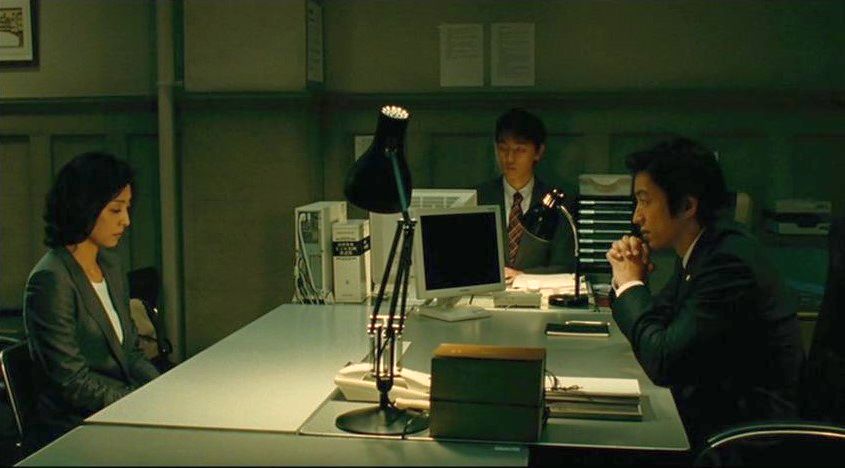
In After Life (Wandafaru raifu, 1998), the second feature film directed by Kore-Eda Hirokazu and Iseya’s debut as an actor, people who have recently died arrive in a place that looks like an administration building or a former school. Each of these deceased is required to choose one memory, and this memory is then re-enacted and filmed before the person is admitted to the Hereafter, where he/she has to stay forever with this one memory. Iseya plays one of the deceased and the only one who, according to the credits, keeps his real name: Iseya Yūsuke, this being one of the aspects that distinguish him from the other dead. Unlike them, he also defies the rules of the game by refusing to make a choice. Moreover, he initiates a discussion on the very idea of choosing just one memory and concludes that those in charge of the Hereafter should reconsider their system. The character in the film is described as an unemployed worker and 22 years old, the actor’s real age in 1998. His clothes – parka and leather trousers – and his wild hairstyle are clear indications of his rebellious nature. However, it is the acting more than anything else that reveals his character, with his very first appearance already hinting at his status as an outsider. He remains aloof from the other deceased standing alone at the window with his back towards them before turning around and giving a look of appraisal to each of the others in the room, his facial expression and body language expressing resistance.
In a series of sequences, several of the deceased are questioned by employees at the mysterious centre helping them to choose a memory. The camera frames the interviewees sitting behind a desk. Iseya is filmed in the same way but his acting is far more expressive than that of his fellow dead. He is extremely lively and continually gesticulates, he tugs at his ear, bursts into laughter and behaves in a disrespectful manner by unabashedly putting his feet on the chair when addressing his interviewers. During a conversation with Watanabe, an older member of the group of the dead who is sitting on a bench, Iseya keeps walking around him while toying with a small branch he has picked up from the floor.
Iseya plays a similarly extrovert character in Distance (Disutansu, 2001), Kore-Eda’s next film. Kore-Eda had originally intended to shoot a road movie on the topic of lying with Iseya and Iura Arata, two of the actors from After Life (4). Iseya and Iura Arata both have roles in Distance, but the project – although the topic of secrecy and lying remains – changed after Kore-Eda became interested in the way the Japanese media and Japanese society reacted to Jōyū Fumihiro, the former public relations officer of the Aum Shinrikyō cult, who was released from prison in 1999 (5). Members of this cult had been responsible for the gas attack in the Tokyo underground in 1995. Distance does not mention Aum or its murderous attack, referring only indirectly to the tragic event that had traumatized Japanese society. The film’s main characters are a group of people whose family members had joined a fictitious cult and participated in the poisoning of Tokyo’s water supply system, which resulted in many deaths. After the attack, the perpetrators apparently committed suicide, their ashes being strewn by surviving members of the cult in a lake close to the place – a small cabin in the woods – where those who committed suicide had spent the last weeks or months of their lives. Since that time, family members of four of the perpetrators meet at the cabin once a year to commemorate the deaths, and Masaru, played by Iseya, is one of these four.
Masaru is a swimming instructor, and he mourns the death of his brother. He and the other protagonists are shown in the cabin in the woods, where they spend the night after their car has been stolen and in flashbacks with their dead relatives. Masaru is the most extrovert of the group, which is joined by Sataka (Asano Tadanobu), a long-time member of the cult, whose motorcycle has also been stolen. The florist Atsushi (Iura Arata) is a quiet young man, the schoolteacher Kiyoka (Natsukawa Yū) an introverted woman, and the sullen Minoru (Terajima Susumu) an employee of a construction company. Sataka keeps in the background, observing the group that he does not really belong to. Masaru, on the other hand, is inquisitive and open towards the others. He keeps on asking questions and is the only one to approach Sataka when he and the other three encounter him in the woods. In the cabin, he is the first to inspect the surroundings, while Sataka sits down on the floor and the others simply stand around.
From the beginning, Masaru is in constant motion. In several early sequences in which the character is introduced, he is shown distributing flyers in a street and enjoying life with his girlfriend. In an arcade, he plays the slot machines enthusiastically with wild movements, clearly having great fun. He seems somewhat immature but is full of self-confidence, emphasized by Iseya’s energetic acting. However, he is far from being superficial. A flashback suggests that he did not fully understand the significance of his brother’s decision to abandon his medical studies and his family and dedicate his entire life to the cult, and later, he tries to hide his grief behind a mask of indifference. One after another, the four mourning protagonists step onto the wooden jetty that leads out onto the lake. Masaru leaves the jetty very quickly – without praying or at least pausing for a moment as the others do. He folds his hands only briefly before turning away. But later that evening, he retreats into the woods alone and plays his suling flute, brought from Indonesia.
One can presume that much of Masaru’s behaviour and dialogue are the contribution of Iseya himself as Distance is based largely on improvisation. As Kore-Eda later explained: “I asked the actors to play without a script. The only information they had was about where we would shoot the film and about the character they played” (6). In his previous film After Life, Kore-Eda had already left much room for creativity, for example in the interviews, during which the dead were filmed facing the camera and in a medium close-up. This kind of framing is an invitation to an actor to fill the static image with life, and Iseya seized this opportunity, making marvellous use of it with a great variety of small gestures and nuanced facial expressions.
Portraits of young men
In Distance, Masaru is the most talkative character, an aspect that underlines his extrovert personality. Indeed, Masaru is as extrovert as the man Iseya himself seems to be, judging from numerous filmed interviews. In both After Life and Distance, his lively acting epitomizes the energy and light-heartedness of youth, making his performance completely natural. This is also the case in his directorial debut Kakuto (2002), produced by Kore-Eda. An animated dream sequence at the beginning of this film establishes a link with After Life. A young man – the protagonist Kijima Ryō (Iseya) – talks about a dream in which he has to keep on running. In Kore-Eda’s film, Iseya had referred to a similar dream, but in Kakuto the dream becomes reality when Ryō, pursued by a revengeful yakuza, is forced to run for his life.
Iseya’s Ryō is a young man who enjoys an apparently carefree life until the night when he loses a package containing drugs that was given to him by a yakuza. The film depicts that fateful night and Ryō’s desperate search for the drugs. Kakuto deals with topics such as drugs and organized crime but it focuses on the lives of young urbanite and suburbanite males in Japan, including the problems they face such as unemployment and disorientation. However, it approaches these topics in a playful way, and Ryō’s aim in life is clearly to have fun.
Although it is reminiscent of Danny Boyle’s Trainspotting (UK, 1996), Kakuto is a highly original work. Iseya, who was twenty-nine years old when he directed the film, tells it from the perspective of someone who is younger and close to the age of his protagonist and the other young men and not from the more distanced viewpoint of an older adult as is often the case with films about young people. Iseya succeeds in portraying the attitude towards life of young upper-middle class Japanese in a very lively and authentic way, Ryō and his friends emerging as full-blown characters and not simply clichés. Iseya plays Ryō in an entirely convincing manner – a hedonistic character who displays a wide range of emotions. When he discovers that he has lost the drugs and imagines the punishment he can expect from the brutal yakuza, Ryō reacts hysterically, looking like a scared rabbit and with the complete opposite of the laid-back attitude he displayed earlier in the film.
Following Kakuto’s portrayals of adolescents and young adults in a refreshing way, Iseya was cast in the early 2000s in more conventional romantic stories such as Honey and Clover (Hachimitsu to kurōba (2006, Takada Masahiro) and Closed Note (Kurōzudo nōto, 2007, Yukisada Isao). Honey and Clover, the adaptation of a manga by Umino Chika (7), centres on the lives of four arts students and on first love. Iseya plays one of the students : Morita, a self-assured young man, who, early in the film, returns from a trip to a country in southeast-Asia. In this film too, Iseya plays a maverick character who, while accepting the conventions of the art business, at the same time refuses to suppress his individuality. At the opening of an exhibition where he presents a huge sculpture, he gets drunk and floors an art critic who made a condescending comment on the work. However, the main reason for this outburst is that Hagumi (Aoi Yū), the young woman he admires, reacted negatively to the art critic’s unfavourable comment. It is because of Hagu’s lack of interest in success and money that Morita later destroys his sculpture. Iseya plays his role – that of a young man who enjoys life but also yearns for fame – with great energy. And, very significantly, when the five main characters take a selfie during a trip to the seaside, Morita is the only one who fools around.
In Closed Note, Iseya, a graduate from Tokyo University of the Arts, also plays an artist – the painter and illustrator Ryō. At first a shy and almost autistic character, his head lowered, his body rigid, Ryō loses this distant attitude, repeatedly displaying intense feelings. Iseya’s fine acting reveals perfectly the development from taciturnity and grief over the death of the woman he loved to renewed artistic creativity.
Manabu, the main character in Negishi Kichitaro’s What the Snow Brings (Yuki no negau koto, 2005), hides his vulnerability behind a mask of arrogance. He returns to his native region, Hokkaido, the northernmost island of the Japanese archipelago (8) after his business goes bankrupt. Penniless and pursued by his creditors, he seeks refuge with his older brother (Satō Kōichi), who trains horses for the Banei Tokachi horse races, a special kind of horse race practised on Hokkaido (9). Iseya’s very natural acting vividly demonstrates a wide range of emotions. The viewer can feel Manabu’s unease in the unfamiliar community of horse trainers. At first he denies all memory of his schooldays that are referred to by a former classmate who now works for his brother. Later, having opened up and accepted his new environment, he is able to rejoice in reliving his memories of school. His attitude towards his brother is at first very aggressive, while his brother in return resents him for cheating their mother of her money and abandoning her. What the Snow Brings is set among people living a harsh life in a hostile and wintry environment. The cold climate is something that the viewer is made to feel, meteorological conditions contributing to the portrait of a vulnerable young man seeking desperately for reconciliation. However, it is Iseya’s restrained and subtle acting that constantly reveals Manabu’s inner torment.
Jidai geki and famous historical figures
Iseya gives proof of his versatility in numerous historical films in which he also often plays outsiders and rebellious individuals. One of the most notable roles in his career is that of Kiga Koyata in Miike Takashi’s 13 Assassins (Jūsan-nin no shikaku, 2010; [10]). In contrast with the typical samurai living according to their strict code of honour, the hunter Koyata is a rebellious character, emphasized by Iseya’s expressive performance. His face and body in constant motion, he creates a flamboyant character who is yet another example of his many fine portrayals of young adults. Koyata’s behaviour is a vivid expression of the gay abandon of youth. For example, when Shinrokurō (Yamada Takeyuki) states he is fed up with the life of a samurai and might become a bandit, emigrate to America and love a woman there, Koyata says laconically: “That sounds good.” The expression on his face at this point shows very clearly that indeed this is something that he too would really like to do.
Both in the cinema and on television, Iseya has played historical figures such as Oda Nobunaga, Toyotomi Hideyoshi, Yoshida Shōin, Takasugi Shinsaku and Shirasu Jirō. He plays Oda Nobunaga (1534-1582), the first of the three so-called unifiers of Japan, in Ask This of Rikyū (Rikyū ni tazuneyo, 2013, Tanaka Mitsutoshi) as a self-confident, arrogant man, hungry for power. When tea masters present bowls and other tea utensils to him, Nobunaga makes his choice with impatient and imperious gestures, his demeanour always having something brusque about it. Sen no Rikyū (1522-1591), the famous tea master and merchant, has brought only a black lacquered box, which he opens and fills with water. He then aligns it with the full moon, the moon’s reflection appearing in the water. Nobunaga stands at a distance and in the background, leaning proudly and defiantly on his riding crop and watching Rikyū closely. The viewer can sense his curiosity, which is emphasized by Iseya’s intense gaze and by subtle changes in the expression on his face.
In Mitani Kōki’s The Kiyosu Conference (Kiyosu kaigi, 2013; [11]), Iseya plays Nobunaga’s younger brother Nobukane (1548-1614) in a highly amusing way, here revealing his talent for comic roles. He plays him as a nonchalant, rather bored man, his acting underlining the character’s eccentric personality and penchant for individualism. In the television mini-series Lady Nobunaga (Onna Nobunaga, 2013, Takeuchi Hideki), Iseya is cast as Toyotomi Hideyoshi (1537-1598), the second of the three unifiers of Japan after a long period of civil war (12), playing him in an equally colourful manner. The tall and handsome Iseya may seem a strange choice for Hideyoshi, who is commonly described as a small man with a wrinkled face that gave rise to his nickname “Monkey”. Iseya is tall but very slim, and in Lady Nobunaga he looks far frailer than the other vassals of Nobunaga and in this respect appropriate for the role physically. And he is also able to wrinkle his face, evoking that of a monkey. In accordance with historical descriptions of Hideyoshi, Iseya plays him as a lively, extrovert character, thereby revealing the difference between Hideyoshi, a man of humble, peasant origins (13), and the other samurai brought up to observe their strict code of conduct.
In the two taiga drama (14) The Legend of Sakamoto Ryōma (Ryōmaden, 2010) and Burning Flower (Hana moyu, 2015), Iseya has important supporting roles. Both series are set in the 19th century in the so-called Bakumatsu era (1853-1868). In The Legend of Sakamoto Ryōma, he plays Takasugi Shinsaku (1839-1867), a samurai who contributed significantly to the ending of the shogunate and the restoration of imperial power, and in Burning Flower, he is cast as Yoshida Shōin (1830-1859). Iseya plays Takasugi as a strong-willed character, once again a maverick who does not care for social conventions. He displays a wide range of emotions, revealing not only Takasugi’s hedonistic and heroic side but also his struggle against tuberculosis, to which he eventually succumbs. Ryōma (Fukuyama Masaharu) visits Takasugi, who has fled his domain, in his hiding place in Nagasaki. Takasugi seems full of energy and talks happily about his plan to travel to England but suddenly starts coughing, claiming that it is only a cold. However, a slight shadow appears on his face and he looks serious and sad for a very brief moment but long enough to suggest that he knows how seriously ill he really is.
The main protagonist in Burning Flower is Fumi (Inoue Mao), a younger sister of Yoshida Shōin, and here Iseya plays another Japanese revolutionary of the 19th century (15). Casting Iseya as Yoshida Shōin is surprising as the historical figure is described as a man of unsightly appearance, his face marred by pockmarks. The physically attractive Iseya may initially seem an inappropriate choice for the role, but he is certainly able to lend the character a strong presence. Shōin is also described as being of a delicate constitution, and Iseya’s slender figure and fine features match this description. Presenting Shōin as a resilient and dynamic figure and not at all weak, Iseya’s representation comes quite close to descriptions of this historical figure. In the series, the scholar and political activist Shōin, animated by the fire of passion, is portrayed as a lively character, and Iseya’s vigorous acting makes this passion and commitment as well as Shōin’s vulnerability both palpable and comprehensible for the contemporary viewer.
When the series was aired, Iseya was about ten years older than Shōin when he died, and he still looks quite young, this youthful appearance probably making the historical figure more attractive to a younger public, connecting with the modern world and inviting identification. However, passion is also an attribute of youth, and Iseya’s acting presence and performance hints at Shōin’s immature side. The series depicts him as idealistic and charismatic but also fixated on his ideas and even fanatical. Iseya’s highly inventive acting adds many nuances to the role and helps the viewer to perceive an ordinary human being behind the political activist and famous historical figure. In one scene, Shōin has a look of surprise on his face when Fumi wears a fancier kimono than usual, and in another scene, he cannot help laughing at his student Kusaka’s (Higashide Masahiro) embarrassment when Kusaka asks him for permission to marry his sister.
Body and voice
In Shirasu Jirō – Man of Honor (Shirasu Jirō, 2009, Ōtomo Keishi), a mini-series produced by NHK, Iseya is cast in the leading role of the businessman and post-war bureaucrat Shirasu Jirō (1902-1985). Iseya plays Shirasu, known for his elegance and fashion sense, as a self-confident, open-minded, outspoken and charismatic man, a figure that fits perfectly into Iseya’s filmography with its great variety of roles.
In the science fiction film Casshern (Kyashan, 2004, Kiriya Kazuaki), shot in digital backlot, Iseya is cast in another main role, that of Tetsuya/Casshern, a young man killed in war and later resurrected by his father, a scientist. Tetsuya is another of the rebellious characters Iseya clearly enjoys playing. In this film, the son rebels against his father and against an authoritarian regime, becoming a saviour of mankind. Tetsuya/Casshern has supernatural powers but is also a broken character suffering from his traumatic war experiences. In several scenes, the viewer sees only his eyes as the lower-half of his face is covered by armour, and Iseya has to rely on his gaze to express emotion. Despite the abundance of technical specs, he manages to create a character with all the facets of a real human being.
In Kaiten – Human Torpedo War (Deguchi no nai umi, 2006, Sasabe Kiyoshi; [16]) Iseya also plays a tormented soul. The film is set in the Pacific War. Kita (Iseya) is one of four students who become members of a special assault unit of the Imperial Japanese Navy. They are pilots of kaiten, crewed torpedoes designed for suicide attacks. Iseya plays only a supporting role but succeeds marvellously in revealing the contradictions in Kita’s character. He is ambitious and cynical and quite different from the other three pilots. In a photograph that shows him together with them, he stands somewhat apart. In the film, his demeanour is dismissive and he is preoccupied chiefly with himself. But he displays emotion when one of his comrades begins to sing a song called “Native Town”. And he is nearly hysterical when he understands that the end of the war is close and that his chances of becoming a war hero are vanishing. All his arrogance is gone when he kneels in front of his comrade Namiki (Ichikawa Danjurō XIII), the film’s main protagonist, pleading with him to let him pilot his kaiten because his own torpedo has been damaged.
Iseya is often cast in supporting roles that he makes memorable with inspiring performances. In Sono Sion’s Shinjuku Swan (Shinjuku Suwan, 2015), set in Kabuki-chō, the red-light district in Shinjuku, a part of Tokyo, Iseya plays the supporting role of Mako, who employs Tatsuhiko (Ayano Gō) as a scout for the Burst agency, which recruits girls and young women for the sex industry. Mako’s interest in Tatsuhiko is aroused when the younger man gets into a fight with six or seven opponents and refuses to give up despite already bleeding heavily and being clearly outnumbered. A medium close-up shows Mako watching the brawl with fascination while nonchalantly lighting a cigarette. Elements such as framing and editing create the basis for the interpretation of facial expressions, but the viewer cannot fail to notice the precision in Iseya’s acting style that reveals Mako as both full of concentration and at the same time completely relaxed.
Iseya has exceptionally flexible facial features and is an actor with an impeccable sense of timing and ability to suddenly change the expression on his face. This talent is revealed in Harmful Insect (Gaichū, 2001), directed by Shiota Akihiko, in which he appears in only one long sequence and a few shots at the end of the film. He plays the role of a young man who is apparently a scout for the adult entertainment business. At a roadhouse, he spots Sachiko (Aoi Miyazaki), a 7th grade girl who has run away from home. Iseya’s performance in this minor role is remarkable. Playing an unnamed young man, he sits down with the girl, who has not asked him to do so and remains silent during the entire scene. He takes a drag on his cigarette, watching Sachiko and scrutinizing her. Then he smiles a very charming, inviting smile and tries to get the girl to talk. Sensitive and meaningful facial expressions emphasize his attempt to gain the girl’s trust and show her that, although an adult, he understands her perfectly. Almost tenderly, he asks Sachiko how old she is. Iseya does all this very naturally and with great creativity, lending additional dynamism to the scene.
Iseya’s virtuosity and also his eccentric acting in Lady Nobunaga and 13 Assassins undoubtedly recall the skills of Mifune Toshirō. In 13 Assassins, Koyata jumps and makes dance-like movements not unlike Mifune’s Kikuchiyo in Seven Samurai (Shichinin no samurai, 1954, Kurosawa Akira). The acting style of both men is eccentric and even exaggerated but always appropriate to the character they are playing. Just like Mifune’s, Iseya’s characters are always on the move. Kurosawa Akira often ensured that Mifune had something in his hands that brought additional movement to the scene and gave the actor opportunities for expression. These objects also served as a means to focus attention on the character. Iseya, too, frequently has some object in his hands to keep them busy. During a conversation with his brother in Distance, Masaru does not sit still. He makes movements like a gymnast with his arms and flips through a publicity flyer of the cult that his brother has given him. In Honey and Clover, Morita sometimes holds a bottle of beer in his hand or is eating while talking to another character.
Another aspect that Iseya and Mifune share is their predilection for playing outsiders, non-conformists and rebels, characters who have problems with authority. However, the way Iseya uses his voice is the more remarkable, and here, too, he explores a great variety of nuances. For example, in Lady Nobunaga, Hideyoshi’s voice becomes soft, emphasizing the secrecy of the information, when he denounces Mitsuhide as a traitor. It is a softness which also contains a hint of menace. In the animated film Tekkonkinkreet (2006, Michael Arias), Iseya speaks the role of the yakuza Kimura Naoki, who realizes that love is more powerful than hatred. However, at the beginning, he is depicted as a violent character. Facing the members of a youth gang, he says: “Take it easy!” and stretches the sentence, his voice expressing his coolness in this situation. On a different occasion, he speaks to one of his opponents in a sweet voice to lull him into a sense of security, and in a conversation with his wife, the deliberating tone of his voice emphasizes his thoughtfulness. In The Passenger (France/Canada/Japan, 2005, Francois Rotger; [17]), the leading character played by Iseya is a taciturn youth who says very little, giving the actor an opportunity to demonstrate how skilfully he is able to deal with silence. The protagonist of this international production set in Japan and in Canada is a young yakuza and male prostitute whose violence and vulnerability are once again revealed flawlessly by Iseya’s intelligent acting.
Present times
In various interviews, Iseya has referred to Yoshida Shōin and Sakamoto Ryōma as sources of inspiration. I will not pretend that Iseya is the Yoshida Shōin or the Sakamoto Ryōma of the 21st century. However, it is easy to understand how great the influence of their philosophy and way of life can be today. Even if in different contexts and with different consequences (18), Iseya, like Shōin, did not content himself with words but became socially active when he created the Rebirth Project, referring in this context to Ryōma, who inspired people with various visions of the future to work with him. When all its dimensions are considered, the Rebirth Project is, not unlike Ryōma’s Kaientai, a multifaceted company (19).
Although the Rebirth Project continues to be active, Iseya had to withdraw from his involvement after his conviction for drug possession in December 2020 (20). This event also offered him the opportunity to change his life completely and to take “a fresh start from the negative” as he stated in an interview in 2024 (21). Instagram became a means to communicate with a larger community (I have to admit to being one of his followers). According to his posts, he is able to afford a non-conformist lifestyle, and as one can read on the website of the Reborn Arts Festival: “he has shifted his focus on self-fulfilment, sharing his journey through the salon Sauce of Happiness” (22). He enjoys surfing, snowboarding and skating, and one might say that the 48-year-old Iseya lives the life of a young adult. However, it is not only a life of leisure. In 2022 he took part in the Reborn Arts Festival, a revitalization festival focusing on the arts, music and food in the Tōhoku area where he presented the installation “Worship”. And in 2024, his second book (23) was published. This autobiography Self-Portrait includes personal photographs and a variety of sketches made by Iseya during his childhood and university years. And even before the end of his probation, he was already cast in a new film: Araki Shinji’s Penalty Loop (24).
He also designs jewellery and clothing or contributes to the creation of such objects, as presented on his Instagram Website. The way he combines commerciality with reflections on social problems, even on the state of mankind today, sometimes sounds contradictory. However, Iseya uses his celebrity status to inspire people and to address questions that seem to plague him. In Distance, Masaru starts a long dialogue with Atsushi about the existence of God. The question about God’s existence is also at the core of his installation “Worship”, about which he has written on the website of the Reborn Arts Festival: “You are God. Think, don’t pray. Act, don’t wish. The world requires only your will, not another god.” (25) On Instagram, he continues to ask questions about God and about each individual’s social responsibility.
This is where the great models of the 19th century resonate – Yoshida Shōin and Sakamoto Ryōma. Hopefully Iseya-san will find self-fulfilment but will also stay committed to social issues. With regard to his acting, the topic focused on in this article, one might recall the words of William Butler Yeats, whose poem “Among School Children” (1928) ends: “How can we know the dancer from the dance?” This article will not and cannot give an answer to the question how much of Iseya is in his roles. Instead it offers insights into his work as an actor without detracting from the magic of an actor’s performances and the secret at their core.
Notes
(1) Names are written according to Japanese conventions: the family name before the given name.
(2) See on the two films directed by Iseya
(3) Reborn Art Fest
(4) See Kore-Eda Hirokazu, Quand je tourne mes films, Paris, Atelier Akatombo, 2019, p. 121.
(5) In his book, Kore-Eda criticizes the behaviour of the media, writing that Jōyū was hounded by journalists and even refused accommodation, which led him to move into a building belonging to the cult. This decision aroused even more criticism from the media. See Kore-Eda, ibid., p. 121-123.
(6) Ibid., p. 131 [Translation by the author].
(7) The manga series was published from 2000 to 2006.
(8) It is perhaps a mere coincidence that the film’s location is this northernmost island but worth recalling that Iseya spent part of his childhood – from the age of three to the age of eight – in Hakodate on Hokkaido.
(9) Banei Tokachi horse races originated on Hokkaido in the early 20th century. Huge draught horses pull sleighs weighing 500 kilograms up and over ramps and through a sand track. Today, the races are held in the town of Obihiro, the film’s main setting.
(10) See for further details in shomingekionline
(11) See for further details in shomingekionline
(12) The third of the unifiers was Tokugawa Ieyasu (1543-1616), the first shogun of the House of Tokugawa. The Tokugawa shogunate lasted from 1603 to 1868.
(13) Hideyoshi was born into a peasant family. His father was apparently a foot soldier, a peasant-samurai who was crippled after having been wounded in battle.
(14) Taiga dorama are the annual year-long historical drama television series produced by NHK, the Japanese Broadcasting Corporation.
(15) Yoshida Shōin was already highly regarded as a scholar before becoming a political activist in the late years of the shogunate. Several of his students at Shōka sonjuku, the school he founded in his hometown Hagi, became influential politicians of the Meiji era (1868-1912) and have contributed to the construction of modern Japan. Takasugi Shinsaku was also one of Shōin’s students. Shōin spent many years in prison and under house arrest and was executed in 1859 during the Ansei Purge (1858-1860), which targeted opponents of the shogunal government.
(16) The film is also known as Sea Without Exit.
(17) See for further details on The Passenger
(18) Yoshida Shōin’s call for action included the one for the assassination of political opponents, i.e. representatives of the shogunate.
(19) As Shiba Ryōtarō states in his novel about Sakamoto Ryōma: “The Kaientai was multi-faceted by nature with five aspects: it was an anti-shogunate association, a private navy, a school of navigation, a transport company, and a trading company, both domestic and international. ‘Let everyone live in accordance with his own beliefs and principles’ was Ryōma’s way of thinking. Thus, if someone liked business and disliked warfare, he should not be forced to fight.” (Shiba Ryōtarō, Ryōma! The Life of Sakamoto Ryōma: Japanese Swordsman and Visionary, Kindle edition, 2018, Vol III, p. 160). The novel (Ryōma ga yuku/Ryōma Goes His Way) was first published in Japan in serialized form in the national newspaper Sankei Shinbun from 1962 to 1966.
(20) According to various press articles, about 13 grams of marijuana were found in his possession. Iseya was sentenced to one year in prison, a sentence suspended for three years.
(21) See Goetheweb
(22) See 2022 reborn art fes
(23) In 2013, Iseya had already published Shakai chokoku, Tokyo, Asahi Shinbun Shuppan in which h deals with the Rebirth Project and his social visions.
24. An interview with filmmaker Shinji Araki in shomingekionline
(25) See 2022 Reborn Art fest
(
Gefällt mir Wird geladen …

 shomingeki - Filmzeitschrift