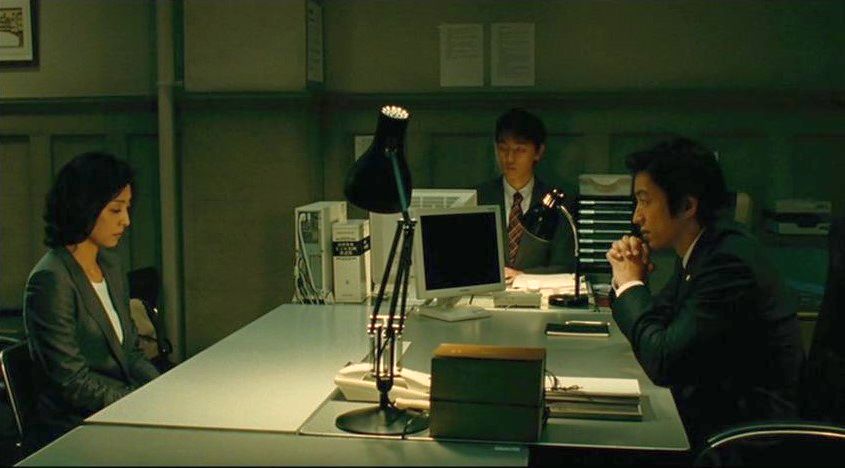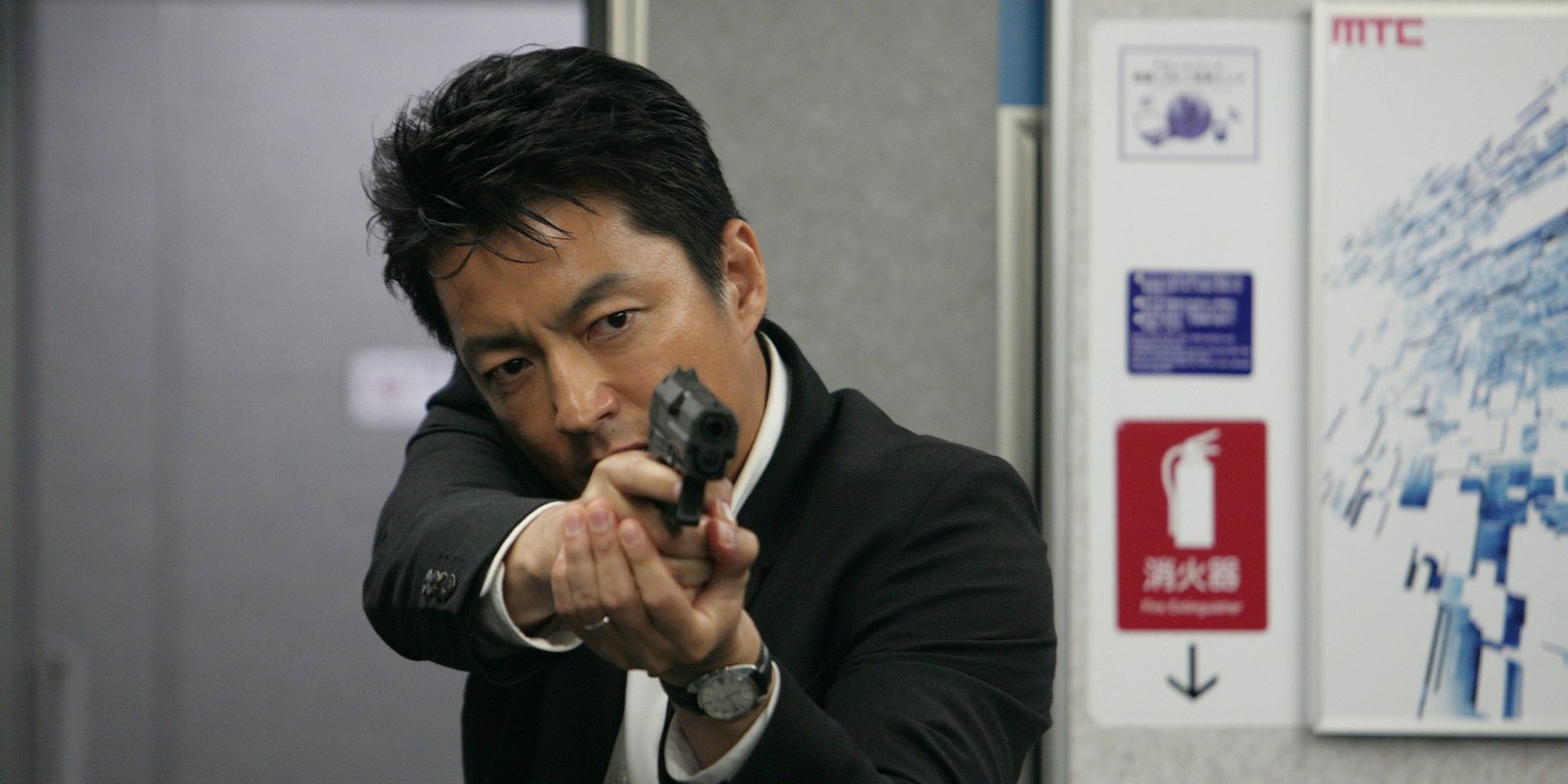
Grunert-Kubi-Image

by Andrea Grunert

In Kubi (Japan, 2023), based on the actor-director’s eponymous novel, Kitano Takeshi (1) plays one of the most colourful figures in Japanese history: Toyotomi Hideyoshi. Hideyoshi (1537-1598) is regarded as the second of the three “Great Unifiers” of Japan after a long period of civil war. Not only an eminent historical figure, Hideyoshi has also inspired folk tales, kabuki plays, manga, novels, television dramas and films. According to Susan Westhafer Furukawa, there has been since his death “a confluence of writing and media about Hideyoshi” (2). As early as 1626, Oze Hoan published The Records of the Taikō (Taikōki), a 22-volume biography that became the basis for many of the stories written about Hideyoshi over the last four hundred years.
One aspect that could explain his continuing popularity is Hideyoshi’s route to power – from peasant origins to the most powerful man in Japan. In his newspaper serialization Taikō: An Epic Novel of War and Glory in Feudal Japan (Shinsho Taikōki, 1939-1942), Yoshikawa Eiji puts great emphasis on Hideyoshi’s adolescence and the early years of his career, addressing values such as loyalty and commitment. In post-war Japan, Hideyoshi as a creative spirit who overcame divisions in society became a model for the salaryman samurai, mirroring the social and cultural transitions of the time (3). In his novel Shinshi Taikōki (1968), Shiba Ryōtaro emphasizes the mercantile spirit of both Hideyoshi and Oda Nobunaga (1534-1582), the first of the three “Great Unifiers”.
Works of literature are inevitably a mixture of historical accuracy and imagination, and this is obviously also true for the many films and television films made about Hideyoshi or in which he figures as a supporting character. Two taiga dorama, the annual year-long historical drama television series, have been produced about Hideyoshi (4): Taikōki (1963) and Hideyoshi (1996). Osone Tatsuo directed Taikōki – The Saga of Hideyoshi (Taikōki, 1958), an adaptation of Yoshikawa’s novel, and in 1987, Okamoto Kihachi directed a two-part television film that also had the title Taikōki. Hideyoshi is one of the two main characters in Mitani Kōki’s The Kiyosu Conference (Kiyosu kaigi, 2013; 5) and an important character in a number of other films such as Love Under the Crucifix (Ogin-sama, Tanaka Kinuyo, 1962), Warring Clans (Sengoku yarō, Okamoto Kihachi, 1963), Love and Faith (Ogin-sama, Kumai Kei, 1978), Death of a Tea Master (Sen no Rikyu: Honkakubō ibun, Kumai Kei, 1989), Rikyū (Teshigahara Hiroshi, 1989), Princess Gō (Gō-hime, Teshigahara Hiroshi, 1992), Ask This of Rikyū (Rikyū ni tazuneyo, Tanaka Misutoshi, 2013). The list of famous actors who have played Hideyoshi is equally long and includes Satō Makoto (Warring Clans), Mifune Toshirō (Love and Faith), Ogata Ken (the taiga drama Hideyoshi), Yamazaki Tsutomu (Rikyū), Ōmori Nao (Ask This of Rikyū), Ōizumi Yō (The Kiyosu Conference) and Iseya Yūsuke in the television production Onna Nobunaga (2013), directed by Takeuchi Hideki.

The narrative structure
Kubi is not a biopic. The action starts in 1579 with the end of an unsuccessful rebellion led by Akari Murashige (1535-1586), one of Oda Nobunaga’s retainers, and it ends in 1582 with Nobunaga’s death. Toyotomi Hideyoshi, at that time still called Hashiba Hideyoshi, and Akechi Mitsuhide (1528-1582) are two other retainers of Nobunaga (Kase Ryō), who is at the height of his power. The film deals briefly with Mitsuhide’s rebellion, during which Nobunaga was killed while Mitsuhide was defeated thirteen days later by Hideyoshi. One should note that all three “Great Unifiers” figure in Kubi, the third being Tokugawa Ieyasu (1543-1616), who achieved unification in the early 17th century (6).
The film starts with images of war: a great number of dead bodies floating in the water, crabs climbing out of the bloody neck of a headless body. Numerous shots and sequences reveal the horrors of war throughout the film including the bird’s eye view of a battlefield strewn with dead bodies. Despite these and other moments of bloodshed, Kitano is concerned mainly with treachery and intrigues. Nobunaga stirs up rivalry among his retainers and generals, deliberately not naming a successor and thereby implying that all of them the chance to prove themselves worthy of the task.
As in other Japanese historical films, there are many scenes showing a lord discussing with his retainers or generals. When they are not in one of these official meetings, Kubi’s main characters are usually busy scheming. Murashige (Endō Kenichi), who has found refuge with Mitsuhide (Nishijima Hidetoshi) after his failed rebellion, begs his friend to rise up against Nobunaga. Nobunaga orders Mitsuhide to kill Ieyasu (Kobayashi Kaoru). And Hideyoshi wants to remove all those involved in his intrigues. In addition to these and other well-known historical figures, the film includes subplots with both historical and fictional characters. The most important of these are created around the storyteller Sorori Shinzaemon (Kimura Yūichi; 7) and the peasant Naniwa Mosuke (Nakamura Shidō II). The former ninja Shinzaemon spies for Hideyoshi. Mosuke, a fictional character, wants to become a samurai at all costs, the recurring motive of a character in numerous jidai geki, including Kurosawa Akira’s Seven Samurai (Shichinin no samurai, 1954). However, unlike the courageous Kikuchyio (Toshirō Mifune), the peasant who dreams of becoming a samurai in Kurosawa’s masterpiece, Mosuke is a coward. Moreover, he kills his friend Tame and steals the head of an enemy general that Tame has cut off, and he hopes to be rewarded. And whereas Kikuchiyo is a complex character whose development from would-be-samurai to selfless fighter for justice is a main topic in Kurosawa’s film, Mosuke does not evolve but stubbornly follows his dream of becoming a samurai, obsessed with the idea of cutting off a general’s head as a trophy (8).

History and imagination: the main characters
The subplots and fictitious characters enrich the narrative of the film, which also contains many references to Kubi’s historical context. The presence of Europeans is evoked in two brief sequences in which Portuguese monks, visitors at Nobunaga’s residence, make their appearance (9). The military campaign against the Mori clan, ordered by Nobunaga and to be carried out by Hideyoshi, is also mentioned. The western-style velvet cape that Nobunaga wears on several occasions is part of an iconography associated with Nobunaga and perpetuated in a number of films, including Kurosawa Akira’s Kagemusha (1980).
It is usually said that Nobunaga committed seppuku at the Honnō-ji temple in Kyoto when Mitsuhide attacked him. In Kitano’s version however, the warlord dies a less honourable death. Convinced that his valet and bodyguard Yasuke (Soejima Jun) will disembowel himself, he offers to assist by beheading him. However, the African-born Yasuke (10) is not willing to follow the orders of his master nor to respect the rites of seppuku, and instead, he beheads Nobunaga with one swift movement of his sword, shouting angrily: “You yellow piece of shit.”
One could call Kitano’s interpretation and portrayal of Hideyoshi unconventional but undoubtedly original, starting with the fact that he plays Hideyoshi himself. Hideyoshi is generally described as a small man – perhaps suffering from rickets – with a wrinkled face who became bald at an early age. His nickname “Monkey” – “Saru” in Japanese – refers to his size and physiognomy and stature. In recent years, Ōmori Nao and Ōizumi Yō, who played the character in Ask This of Rikyu and The Kiyosu Conference respectively, are actors of slender build and thus similar to the usual image of Hideyoshi, their vivid acting style contributing to this perception. This is also the case for the tall and handsome Iseya Yūsuke, who played Hideyoshi in the miniseries Onna Nobunaga, the way he managed to wrinkle his face evoking the image of Hideyoshi, the monkey.
Kitano is much older than these actors, all of whom were born in the 1970s whereas Kitano was born in 1947. Moreover, he plays Hideyoshi as a rather clumsy person very much lacking vigour. By interpreting the role himself, Kitano underlines his refusal to follow conventional visions of Hideyoshi, and the differences are revealed not only physically but also by the absence of a variety of characteristics commonly associated with Japan’s second unifier, some of these characteristics having become established during Hideyoshi’s lifetime. As Susan Westhafer Furukawa puts it: “The first person to fictionalize Hideyoshi was Hideyoshi himself.” (11). Written nearly 350 years later, Yoshikawa’s novel incorporates characteristics such as loyalty and hard work, attributes that can serve as ideal values for readers and film viewers alike. In Osone’s Taikōki – The Saga of Hideyoshi, a digest version of the novel, Hideyoshi (Takada Kokichi) is depicted as an ambitious young man, a true self-made man and charismatic personality who prefers the society of commoners to those of samurai (12). This highly romanticized portrayal of Hideyoshi is heightened by the emphasis the film puts on filial duty. Hideyoshi’s ambition to become a samurai is paralleled by his strong desire to repay the debts he owes his mother (and elder sister), who made many sacrifices to help him.
Hideyoshi’s rise from humble origins to power became an inspiring tale for post-war Japan, as Shiba’s novel Shinshi Taikōki demonstrates. However, far from being idealized, Hideyoshi became an ambiguous figure as a result of critical approaches, as in Tsutsui Yasutaka’s satirical novella Yamazaki (13), and film directors also created critical interpretations of Hideyoshi’s heroic status. In Love under the Crucifix, Love and Faith, Death of a Tea Master, Rikyū, Ask This of Rikyū and Onna Nobunaga, Hideyoshi is depicted as selfish and materialistic, ambitious and despotic.
According to a Japanese saying, when asked what to do if a cuckoo does not want to sing, Nobunaga would have said: “Kill it!”, Hideoyshi: “Make it want to sing” and Ieyasu: “Wait for it to sing.” This saying reveals the different characteristics of the three men, referring in Hideyoshi’s case to his cleverness and charisma. Hideyoshi’s eloquence and political acumen are reflected in Mitani’s The Kiyosu Conference, which also emphasizes his intelligence and manipulative power. However, Kitano retains only the image of the schemer. He plays Hideyoshi as a brutish person, a Hideyoshi who does not coax the cuckoo to sing. He is a rather dull character, delegating duties to his more eloquent and capable half-brother Hidenaga, played by Ōmori Nao, who gives a far more vivid interpretation of Hideyoshi in Ask This of Rikyu. In one of Kubi’s very funny scenes, it is revealed that Hideyoshi is illiterate and depends largely on his brother’s abilities (14). However, he is shrewd and knows how to use and misuse other people to suit his own needs.
As in most of the films referred to in this article but with the exception of Taikōki – The Saga of Hideyoshi, Hideyoshi is depicted as a man of violence who has nothing of the leadership qualities suggested in Osone’s film from 1958 (15). In Kubi, a horrified Hidenaga declares : “You toy with the lives of people.” One difference from the cruel Hideyoshi in Onna Nobunaga is that Kitano’s Hideyoshi does not do the killing himself but delegates his murderous deeds to his subordinates and allies, a behaviour that contributes to the character’s ambiguity. The traditional image of Hideyoshi as a smooth talker, is perverted, and when Kitano’s Hideyoshi talks, it is often to give an order to kill.
Kubi means “neck”, and the bloody neck of the headless body shown in the opening sequence is an early indication of the violence in the period depicted by Kitano. The neck as the target of samurai swords is repeatedly evoked throughout the film. However, the word is not only used in the context of violence. The famous tea master Sen no Rikyū (Kishibe Ittokū) confides to Mitsuhide: “I wash my neck every morning. I will keep my kimono clean until the country is united.” A shrewd man, his secretive behaviour ensures that he literally keeps his head.
Compared to Kitano’s Hideyoshi, Nobunaga looks rather young (16) and is energetic if not hyperactive. Kase Ryō gives a perfect representation of the despotic and cruel leader suggested in the saying about the cuckoo. In Kubi, he is a true psychopath and not at all like the visionary Nobunaga of the recent television production Okehazama – Rise of Oda Nobunaga (OkehazamaHao no tanjō, Kawake Shūnsaku, 2021). Kitano’s Nobunaga as played by Kase is not content simply to order killings as Hideyoshi does, and he also takes pleasure in humiliating – verbally and physically – and brutalizing his subjects. For example, he has Murashige bite off a ball of rice that he has put on the tip of his sword, turning the weapon around in his mouth until blood gushes out. In another scene, he brutally kicks and punches Mitsuhide.
Mitsuhide is referred to as “brooding and boring”, and it is with a constant expression of pain that Nishijima Hidetoshi plays the role of the man who in 1582 rebelled against his lord. He is portrayed as a loyal retainer who hesitates when urged by his lover Murashige to rise up against Nobunaga, and instead, he is pedantic in the way he follows the rules of his social class. In one scene, the two samurai are shown naked in bed. Murashige, the hunted rebel, touches Mitsuhide’s cheeks tenderly, but Mitsuhide thrusts his hand away, saying: “We are enemies. Behave accordingly.” However, Mitsuhide’s loyalty to his lord begins to waver when he learns that Nobunaga plans to have him killed. Ambition leads him to sacrifice Murashige (“The weight of ruling the land weighs heavier than the bond between two samurai.”), whom Mitsuhide has killed by his servants (17).

Power and performance
Homosexuality is one of the major topics in Kubi and is closely linked to questions of power and violence. Mitsuhide and Murashige are secret lovers while Nobunaga openly has sex with his young retainer Mori Ranmaru (Kanichiro; 18), being watched by Mitsuhide. The idea for a homosexual relationship between the two men stems from representations of Nobunaga and Ranmaru known from nanshoku literature (19) of the Edo period (1603-1868). Homosexual relations rarely figure in jidai geki, one exception being Oshima Nagisa’s Taboo (Gohatto, 1999), starring Kitano Takeshi. Kubi depicts an all-male universe in which the desire for power is stronger than sexual lust or sentimental feelings. Nobunaga promises Mitsuhide that he can become his successor if he declares his love for him. However, these are apparently mere words.
Kase Ryō’s Nobunaga is a highly eccentric figure and the opposite of both the crude Hideyoshi and the hesitant Mitsuhide with the latter’s constant expression of displeasure.
Nobunaga lives in accordance with the motto: “From the moment you’re born, life is one big joke.” Wearing a European velvet cape and colourful kimonos, he is reminiscent of an entertainer. References to theatre abound in Kubi. The storyteller Shinzaemon and a group of performers accompanying the troops of soldiers are a further link to the world of theatrical entertainment. In one sequence, a Noh play is performed. Such elements are often used in jidai geki, and here they provide an intertextual link to Kitano’s roots in the theatre as well as suggesting that many politicians are not unlike performers dealing with illusions.
In Kubi, humour contributes considerably to this element of performance and entertainment. Humour is both verbal and physical, supported by the comic talent of Kitano, Ōmori, Nakamura Shidō II and Asano Tadanobu, who plays Kurobe Kanbei (1546-1604), one of Hideyoshi’s advisors and known historically as his chief strategist. The witty repartee between Hideyoshi, Hidenaga and Kanbei presents them as a trio of comedians. In one scene, Hidenaga, in conversation with the samurai Koroku and Nakagawa, pretends to be deeply shaken by Nobunaga’s death. Hideyoshi and Shinzaemon watch the scene from behind a wooden wall and laugh their heads off at Hidenaga’s convincing performance, with Ōmori’s rather exaggerated acting signalling to the viewer that he is only pretending and that the tears he is shedding are crocodile tears. The presence of the two characters hiding from Koroku and Nakagawa even heightens the theatrical dimension of the scene. At a different point in the film, Hideyoshi asks Koroku: “Can you and Nakagawa die together?” He immediately corrects this slip of the tongue: “I mean lead the attack together?” Behind the joke lurks deadly seriousness that reveals Hideyoshi’s penchant for violence. This is also the case in the scene in which Shinzaemon has cheated at gambling. Hideyoshi intervenes, ordering: “Stick your neck out.” Instead of decapitating the former ninja, Hideyoshi starts laughing: “Just kidding.” A little later he sends Shinzaemon to the village of the Kōga ninja, saying nonchalantly to his brother: “He will die anyway.”
The role of the peasant Mosuke also has comical elements that contribute to the film’s burlesque aspect. A horo (20) attached to his back, he staggers rather than walking. However, he does not discard the horo, in the belief that wearing it makes him a samurai. Samurai codes are also mocked in the scene showing the seppuku of Lord Muneharu, watched by Hideyoshi, Hidenaga and Kanbei. Hideyoshi, growing impatient, shouts: “Hurry up and die!” while Kanbei reminds him: “No, no, my lord. The last rites of a samurai …” Hideyoshi’s retort that he is a peasant shows his lack of respect for samurai conventions as well as his selfishness and disregard of others. After Mitsuhide’s revolt has been put down, the heads of the dead are on display. Hideyoshi recognizes Mosuke’s head but not Mitsuhide’s. Enraged, he kicks the severed head, making it fall to the ground and revealing once again his disrespect for the dead and the codes and customs of the warrior class. The display of the heads is also a reminder that death is the great leveller and makes no distinction between samurai and peasants. In Kubi. there is nothing honourable about death. Murashige, a prisoner in a palanquin that is only a wooden box, is taken away by Mitsuhide’s servants, who push it into a ravine, the samurai being discarded like some object that is no longer needed.

Conclusion
Beginning in the late 1920s, the traditional image of samurai has been tarnished in a great number of jidai geki and the codes of behaviour of the warrior class – closely linked to matters of honour and loyalty – have been called into question. Humour is used as a means to deconstruct the ideal of the warrior class in Yamanaka Sadao’s The Million Ryō Pot (Tange Sazen yowa: hyakuman ryō no tsubo, 1935). Unlike Mitani in The Kiyosu Conference, another historical comedy revealing political intrigues and treachery, Kitano mixes humour with violence and even gore elements. Keeping a fine balance between violence and humour, Kubi, both blood-drenched and funny, is a highly entertaining retelling of history. Challenging the image of Hideyoshi by means of humour, Kitano nevertheless depicts him as sympathetic. However, his Hideyoshi also has a cunning and cruel side, and behind the image of the unsophisticated peasant, Kitano unmasks the tyrant and warns against autocratic behaviour, something that remains a threat in present-day societies.

Notes
(1) Names are written according to Japanese conventions: the family name before the given name.
(2) Susan Westhafer Furukawa, The Afterlife of Toyotomi Hideyoshi: Historical Fiction and Popular Culture in Japan, Cambridge, Mass./London: Harvard University Asia Centre, 2022, p. 1.
(3) See Westhafer Furukawa, op. cit., chapter 3: “The Salaryman Samurai: Hideyoshi as Business Model”, p. 84-121.
(4) Taiga dorama (literally “Big River dramas”) have been produced since 1963 by Nippon Hōsō Kyōkai, which can be translated as Japan Broadcasting Corporation. A taiga drama on Toyotomi Hidenaga, Hideyoshi’s half-brother, as central character is planned for 2026.
(5) See my article on The Kiyosu conference as a battlefield.
(6) Tokugawa Ieyasu achieved the unification of Japan after defeating the Toyotomi and their allies at the Battle of Sekigahara in 1600. Ieyasu became shōgun in 1603, and the Tokugawa family ruled over Japan from 1603 until 1868.
(7) Sorori Shinzaemon is said to be the founder of rakugo storytelling. However, it is not clear whether he really lived or is a figure from the realm of legends.
(8) There are many similarities between Mosuke and Tōbei (Ozawa Eitarō) in Kenji Mizoguchi’s Ugetsu (Ugetsu monogatari, 1953), which is set in the same period as Kubi. Tōbei is a peasant whose dream of becoming a samurai becomes an obsession. He also kills to gain possession of the head of an important warrior. Unlike Mosuke, Tōbei is rewarded for his cleverness and made a samurai. In the end, however, he renounces being a samurai and returns to his village. He does this out of love for his wife, while Mosuke is relieved that his wife and children have been killed. In this manner, they do not impede his aspirations.
(9) The first Portuguese ships arrived in Japan in 1543.
(10) Yasuke, presumably born around 1555, arrived in Japan with the Portuguese accompanying the Jesuit Alessandro Valignano on his first visit to Japan in 1579. In Japan, he became the valet and bodyguard of Nobunaga. According to historical sources, he survived the Honnō-ji incident. However, his subsequent life and the date of his death remain unknown.
(11) Susan Westhafer Furukawa, op. cit., p. 35.
(12) Note that Yoshikawa’s novel covers Hideyoshi’s life only from the age of 6 to the age of 49. Kitano’s film ends even before in the early 1560s.
(13) See Susan Westhafer Furukawa (op. cit.) for further details about the perception of Hideyoshi in Japanese culture since the 1950s. Westhafer Furukawa puts great emphasis on literature and also on matters such as tourist sites related to Hideyoshi. Film is a peripheral topic in her book and she deals with it only superficially.
(14) Hidenaga (1540-1591), always loyal to his half-brother, is regarded by some historians as his brain and right-hand man.
(15) Especially at the end of his reign, Hideyoshi acted with extreme brutality, for example the seppuku to which the famous tea master Sen no Rikyū was condemned, the execution of the whole family of Hideyoshi’s nephew Hidetsugu and the savage executions of Christians. Historians can only speculate about the reasons for these acts. See Mary Elizabeth Berry, Hideyoshi, Cambridge, Mass./London, The Council on East Asia Studies & Harvard University Press, 1982, p. 222-228.
(16) Kase, born in 1974, is 27 years Kitano’s junior.
(17) This is fictional, and in reality Murashige died in 1586, four years after Nobunaga and Mitsuhide.
(18) Mori Ranmaru was presumably born in 1565.
(19) Nanshoku, literally “male colours”, is a form of literature dealing with male-to-male sexuality in pre-modern Japan.
(20) A horo is a cloak or garment put over a framework of wicker, bamboo or whalebone which was attached to the back of the armour of a samurai and enhanced the appearance of the mounted warrior or highlighted his rank. It also had a protective function against arrows. In Mizoguchi’s Ugetsu, Tōbei thinks that wearing a suit of armour and owning a spear are enough to be considered a samurai.

Grunert-Image-01

by Andrea Grunert

Okamoto Kihachi (1) started his career as an assistant to several famous directors of Japanese cinema, including Makino Masahiro, Naruse Mikio and Honda Ishirō. He made his directorial debut in 1958 with All About Marriage (Kekkon no subete), a romantic comedy. But he very soon turned to other genres and in 1959, he made his first war film, the satire Desperado Outpost (Dokuritsu gurentai), followed two years later by the sequel Westward Desperado (Dokuritsu gurentai nishi-e). Okamoto also directed several crime genre films. His spy film The Age of Assassins (Satsujinkyō jidai, 1967) once again contains satirical elements as does his jidai geki film Kill! (Kiru, 1968). Jidai geki films are set in the Tokugawa period from 1603 to 1868, and Okamoto’s original approach in this film left an undeniable mark on the genre. Other jidai geki masterpieces that he directed undoubtedly include Sword of Doom (Dai-bosatsu tōge, 1966) and Samurai Assassin (Samurai), the latter being the focus of this article.
Produced by Tōhō Studios and Mifune Productions (2), the film stars Mifune Toshirō, who was already cast in a supporting role in All About Marriage. The film from 1958 marked the beginning of a long period of collaboration of the two men, who worked together on ten films. The script of Samurai Assassin was written by Hashimoto Shinobu, one of Kurosawa Akira’s usual collaborators, and is based on a novel by Gunji Jirōmasa.

The historical context
The action is set in February and early March 1860 in Edo (present-day Tokyo) and focuses on the attempt by a group of rebels to assassinate Ii Naosuke (Matsumoto Kōshirō VIII), the Great Elder, a high ranking official during the shogunate whose status could roughly be compared to that of a modern-day prime minister (3). The period depicted in the film is known as Bakumatsu (“end of the Bakufu”; the Bakufu denoting government by the shogun), a period of great turmoil sparked off by the arrival of American ships in Edo Bay in 1853. The threatening attitude of the Americans put an end to the isolationist policy that Japan had maintained since the 17th century. Bakumatsu ended in 1868 with the abolition of the shogunate and the restoration of imperial rule. Ii, the most powerful official of his time, was a supporter of the Tokugawa shogunate and favoured opening the country up to international trade. However, his policy encountered strong opposition from imperialist loyalists, mainly from those in the provinces Mito, Chōshū and Satsuma, to which Ii responded with violence by ordering the “Ansei Purge” (1858-1860), during which a large number of individuals suspected being disloyal to the Tokugawa shogunate were imprisoned, exiled or even executed. His merciless policy against his opponents made him a most hated figure.
The film’s plot culminates in the assassination of Ii by seventeen imperial loyalists from Mito and one from Satsuma at the Sakurada Gate, one of the entrances to Edo Castle, the shogun’s palace (today`s Imperial Palace) in Edo on 24th March 1860. In the film, Ii has only a few appearances and in one sequence he expresses his regret about the Ansei Purge, considering it too harsh. He is therefore reluctant to take action against the men from Mito who are suspected of planning an attempt on his life purely on the basis of suspicion. He is, moreover, arrogant enough to find it absurd that someone should try to kill him in broad daylight.
The film centres on the group of assassins plotting and scheming, starting with their first failed attempt to kill Ii. During a meeting at an inn, they discuss the reasons for this failure and the possibility that they were betrayed. While they consider who the traitor could be, the camera moves from one face to another until it settles on a figure sitting in the background. Camera movement and framing emphasize that this is the presumed culprit – the film’s main protagonist Niiro Tsuruchiyo (Mifune). While the opening credits run, Tsuruchiyo is shown unabashedly plucking a hair from his nose. In these very first shots of the protagonist, his attitude already differs from that of the other conspirators. He seems uninterested in their discussion and leans against a wall as if he is asleep. His unkempt appearance also distinguishes him clearly from the other members of the group.
Later, it is said that he is a ronin from Bishuu who lives in a shack and has the reputation of being a ruffian, stealing and killing and earning his living as a bodyguard and blackmailer. Numerous scenes show his penchant for violence and alcohol. In fact, Tsuruchiyo is a drunkard and an impetuous and short-tempered man, but he is also one of the two best swordsmen in the group of conspirators. It is because of his great skill with the sword that a man with such a bad reputation could become a member of the Mito group.

Portrait of an outcast
In Samurai Assassin, Mifune Toshirō again plays an outcast and a character guided by his emotions. Because Okiku (Aratama Michiyo), the woman who runs the inn where the meeting of the Mito samurai takes place, bears a striking resemblance to the woman he was once in love with, Tsuruchiyo stubbornly refuses to leave the place for days and becomes obsessed with Okiku. Dialogues and flashbacks reveal Tsuruchiyo’s origins and his decline. Born the illegitimate son of a high-ranking samurai and his concubine, he was adopted by a Doctor of Medicine, a man closely associated with samurai. Supported financially by the merchant Kisoya (Tōno Eijirō), a friend of Tsuruchiyo’s mother, he was given an excellent education as a young man and became the best student in a famous dōjō (a place of immersive learning, especially in the martial arts) in Bishuu. His unrequited love for Princess Kiku (also played by Aratama Michiyo) has turned him into an outcast. Rejected by the young woman’s father (Shimura Takashi) because of his low status, he lost all self-control and started drinking and quarrelling. Expelled from the dōjō, he became a ronin and the depraved individual he is portrayed as in the film. Haunted by the wish to discover the truth about his biological father, he seeks social recognition. His decision to join the conspirators from Mito is not based on ideology but on the hope that he will be rewarded following Ii’s death, and he dreams of becoming a samurai with a steady income.
Mifune’s performance is flawless as ever, his acting being in perfect accord with the portrayal of Tsuruchiyo as a brute, a man whose behaviour, in particular in the film’s final sequence, is close to madness. Despite the many scenes focusing on Tsuruchiyo’s outbursts, there are some moments in which he reveals a different and gentler side of his personality. When Tsuruchiyo plays with his friend Kurihara’s (Kobayashi Keijū) young son, he looks happy and relaxed. But the mention of his dead mother puts an end to this idyllic moment. Tsuruchiyo’s smile fades and his features darken into an expression of sadness.
Mifune’s energetic performance is an important contribution to the film in the way it deals with Tsuruchiyo’s inner torment. The loss of the love of his life and the desperate search for his biological father’s identity are the reasons for his decline and his subsequent struggle for dignity. He tells his friend Kurihara – who is not only an excellent swordman but also a renowned scholar – that his only aim is to live as a human being again. Unable to understand Kurihara’s remark that he has the same dream but extends this aim to other people, he simply says: “I don’t understand. All I know is that you are a good man.” This humble remark implies that Tsuruchiyo is not an intellectual like his friend, but it reveals that he is a caring and sympathetic human being.
However, he is the one who kills Kurihara, suspected by the Mito group’s leader Hoshino (Itō Yūnosuke) of being a traitor. Despite his doubts about Kurihara’s guilt, Tsuruchiyo agrees to the deed after being threatened with expulsion from the group. The prospect of being rewarded by being chosen for the murder of Ii is stronger than his friendship with Kurihara. When the identity of the group’s real traitor is revealed a little later, Tsuruchiyo is desperate, but for the cynical Hoshino, Kurihara’s death is merely collateral damage. In this sequence, which takes place at night in a dimly lit interior, Hoshino’s haughty expression and his pale face, stand out in the darkness, giving him a diabolical aura as the film’s embodiment of evil.
Tsuruchiyo, by contrast, is a character of contradictions. Called a “monster” by some, he is mainly a tormented soul and still capable of deep feelings. His counterpart on a symbolic level can be found in the Noh play Kurozuka (Black Mound), a play that Ii attends a performance of in the film. In this play, the female character who becomes a demon due to obsession wears the hannya mask of a vengeful spirit. However, this mask has a dual significance, the person who wears it being not only a demon but, like Tsuruchiyo, also grief-stricken and tormented, thereby displaying the complexity of the human being.

A cinematic style of contrasts and fragmentation
Samurai Assassin is a film about the end of an era – that of the shogunate – and about darkness pervading a man’s soul. The many nocturnal scenes and the magnificent use of black-and-white photography with its subtle interplay of light and shadow, strongly support these central themes. This is also true for the use of meteorological phenomena such as rain and snow. Many of the scenes take place in pouring rain, underlining the misery of the film’s protagonist as he staggers drunkenly through the muddy streets. The assassination of Ii takes place during a heavy fall of snow, the white blanket on the ground being not a symbol of innocence or purity but referring to death. Also significant is the fact that Ii’s is assassinated on Peach Observance Day, or Girls’ Day/Doll’s Day (hinamatsuri), a festival with its religious origins in Shintoism on which the health and happiness of girls and young women are celebrated (4). On this day, dolls representing the emperor and empress and their entourage dressed in court costumes of the Heian period (784-1185) are put on display. In the film, Okiku has brought such dolls to Tsuruchiyo’s shack and arranged them according to the custom of hinamatsuri. The contrast between the symbols of youth, joy and innocence and Tsuruchiyo’s depravation, represented in this sequence by his dilapidated hut, revealsonce again the complexity of his personality and the tragedy of his life. Talking about his dream of social ascendency. Tsuruchiyo’s smiling face has something childlike, another reminder that this ruthless killer is nevertheless a human being. However, Okiku’s attempt to save Tsuruchiyo from himself fails. Returning to the shack the next morning, she finds on the dirty floor only the dead bodies of the ten killers that Hoshino has ordered Tsuruchiyo to liquidate and also the dolls. Later, the assassination of Ii takes place off-screen, beheaded by Tsuruchiyo, and the film shows the head of the emperor-doll earlier seen as a bridegroom falling down as if it has been cut off – an aesthetic device that also suggests the end of all happiness for Tsuruchiyo and Okiku.
As in other films directed by Okamoto, extravagant framing abounds, such as series of close-ups of faces or objects and an insistence on body parts. In the duel scene between Tsuruchiyo and Kurihara at their first meeting, the camera shot remains on the feet of the two opponents. Only at the moment when the two swords clash are Tsuruchiyo’s face and upper body framed. Very often in this scene, a face, a part of a body or an object are foregrounded. Another frequent device is the use of a frame within a frame, for example when the bamboo screens create a frame in one of the shots. Okamoto employs the technique of depth of field in a particularly ingenious manner, using bodies or parts of bodies as framing devices for a human figure in the background. Satō Masaru’s film score makes use of drums and flutes borrowed from Noh theatre to produce hammering or plaintive but always insistent sounds that are sources of strong tension.
Music, lighting, framing and sudden camera movements destroy any sense of harmony and therefore contribute to a feeling of insecurity and disorientation. The action in the film culminates in the attack on Ii and his retinue, which is filmed in virtuoso fashion and leads to scenes of pure carnage in which the conspirators kill the samurai and servants accompanying Ii and themselves die in the bloodbath. Writhing bodies, severed limbs and screams of the dying contribute gruesome effects to the sequence.

The individual in history
A picture of the assassination of Ii at the Sakurada Gate shows a samurai running away rejoicing with a severed head impaled on his sword (5). In the film, Tsuruchiyo is shown in a similar manner, running away with Ii’s severed head on his sword and shouting in triumph. In the film’s final shot, Tsuruchiyo is an ever-shrinking figure in the falling snow the individual depicted as meaningless in the expanse of the snow-covered square at the Sakurada Gate.
Tsuruchiyo may be a violent man who has been led astray by circumstances, but in the group of Mito revolutionaries, he is a prisoner in a web of violence and intrigue. After being told Tsuruchiyo’s tragic life story, Okiku falls in love with him. Both she and Kisoya try to help him, and even Ii, who is, as it turns out, Tsuruchiyo’s father, is concerned about his unknown son, having asked one of his councillors three times about his whereabouts. However, when Kisoya finally decides to tell Tsuruchiyo who his father is, it is already too late.
Once again, Mifune plays an outstanding swordsman, although not a heroic figure but the victim of manipulation whose longing for honour and social recognition turns out to be an illusion. Tsuruchiyo is unaware of his self-destructive behaviour and of the collapse of a whole system, which is the consequence of Ii’s murder. Facing death, Ii makes a prophecy about Japan’s future, saying that his death means that Japan holds no future for the samurai. And indeed, the abolition of the samurai class came only a few years after Ii’s assassination (6).
However, the conventions of the rigid class system of the Tokugawa period with the samurai as the highest caste have plunged Tsuruchiyo into misfortune. The concept of honour that is associated with the samurai is absent in Okamoto’s film. And as in Kobayashi Masaki’s Harakiri (Seppuku, 1962), Okamoto’s view on the place of the individual in a corrupt society as well as in history is utterly pessimistic, with the individual just a small cog in the huge machinery of history. The names of Kurihara and the real traitor have been erased from the clan’s records, and Tsuruchiyo’s name was erased by Hoshino the night before Ii’s assassination, leaving no trace of the assassin in the history of the Mito clan and, by extension, in Japanese history. Tsuruchiyo’s triumph is a mere illusion, imbuing the end of the film with a feeling of overwhelming sadness, just as the cold of the wintry weather is pervasive on the screen and even palpable for the viewer.

Notes
(1) Names are written according to Japanese conventions: the family name before the given name.
(2) Actor Mifune Toshirō founded his production company in 1962.
(3) Ii Naosuke (1815-1860) presided over the Council of Elders from 1858 until his death in 1860.
(4) After the introduction of the Gregorian calendar, the date of hinamatsuri was fixed on 3rd March. However, before that time, it was on the third day of the third month. The use of different calendars explains the discrepancy between the day on which

hinamatsuri is celebrated today and the day of Ii’s assassination, given as 24th March in the Gregorian calendar.
(5) I refer here to a silk painting dating from 1860 and the work of an unknown artist.
(6) The feudal system and the privileges of the samurai class were officially abolished in 1871.

chaalchira 1

1.Something like a review

The good thing is – I can still fall for a film, in this case with this strange beautiful beast called Chaalchitra Ekhon. But as I am going old it becomes more and more difficult to translate all this emotions, all this enthusiasm into a coherent prose. The film is very much at the same time. It is a chapter from the biography of one of the most important Bengali film directors Mrinal (called in this film Kunal) Sen, who was a mentor for Anjan Dutt. But it is also a film about the first encounter of these two man. Even though the time is not explicit mentioned, it is 1980 when Sen casts the young Anjan (called in this film Ranjan) for his film Chaalchitra (Kaleidoscope). In this sense it is Dutt´s second autobiographic film which begins where Dutta Vs Dutta ends. But it is as well a film about Kolkata.

We see them while shooting the film and often in long discussions. Beside discuusions about their different ideologies and the work on the film, there are moments when they talk more privately, about their families or for example ho Sen became a filmmaker. These moment are hints that the relationship between the two men goes beyond a relationship between mentor and protege and it seemed to be something like these simple mundane but nevertheless poetic moments one can find in the films by Ozu and Ford. Like I mentioned the other protagonist is the city itself.

Anjan Dutt played in his own films often very difficult, alienated and failed fathers or father-like characters. In this film he plays Kunal (Mrinal) Sen another father-like figure but exactly the positive opposite of the father in Dutta Vs Dutta (also played by himself, an aspect I will return later to. Sawon Chakraborty plays the young Dutt. Both performances moved me in different ways. Dutt´s portrait of Sen seems to happen completely out of his memory in his mentor without mimicking and without hyperbolic make-up. Sawon Chakraborty seems to me very credible as the lanky young man. There is for example the funny habit of Sen to collect match boxes. When I saw this film for the first time I enjoyed the affectionate humor. At the first sight I did not feel the melancholy like in his Dutta Vs Dutta or Aami Ashbo Phirey. But when I saw it for the second time, I realized that the songs had as well subtitles (only one of them is sung in English) which changed my mood and changed my perception of this film.

There are two different alienation effects in this film. The one, often tangible in the shooting programme (which take places on non-designed real streets, in cars , trams and lanes and recorded with handheld cameras). Sometimes freeze frame shots interrupt the flow and suspend for a moment the cinematic illusion of movement, the film is for seconds reset to its primordial state, the photograph. This alienation effect reminds me in some films by Mrinal Sen. But since I watched the film again, I discovered a second and very different alienation effect which I connect rather with Anjan Dutt. The wonderful songs by Anjan and Neel Dutt might be the most popular elements in all films by Anjan Dutt. But the songs were always interwoven with care and very thoughtful in the artificial into the architecture of his films, as coordinates for orientation in Dutta Vs Dutta, more experimental as another level of perception in Aami Ashbo Phirey or Finally Bhalobasha. The lyrics from the songs used in Chaalchitra Ekhon suggest a retrospective perspective, from another time rather our present than the passed time of the film´s narration. During this songs, the film sometimes digresses from the narration into lanes, markets or river banks etc. The narrative flow is interrupted and suspended for a moment. But sometimes they seem as well here the pendant to Anjan Dutt´s voice over narration in Dutta Vs. Dutta. While watching the film again, I laughed a bit less and felt a bit more the melancholic under current. The film becomes more a memory of a time and especially of a person who is already missed. It is rather a personal, poetic epitaph. And those we miss, we sometimes remember with a smile.

There is a great moment which gives an image about the visual imbedding in Kolkata´s urban landscape. Ranjan Dutt and Kunal Sen are discussing on Sen´s balcony. Later we see them on the balcony from the streets in a long shot. The two characters appear now a living part of the city´s architecture. That is almost an Edward Hopper-moment.

  1. My experience with this film

I celebrate myself and sing myself

And what I assume you shall assume

For every atom belonging to me

as good as it belongs to you.”

(Walt Whitman, Song of Myself, published in Leaves of Grass))

While writing my review on this film, I came across of a lot of reactions, most of them share my enthusiasm, few of them are more reluctant reviews. Especially the more reluctant with which I can not agree made me thinking about a general problem of film criticism, the judgmental and often smart-alecky perspective. What is the right language one uses when one loves a film with skin, hair and bones. It is relatively easy for me to articulate from the safe place of a reviewer why Chaalchitra Ekhon is a great film but I still think there is more and I am often too shy to articulate when films goes much deeper than for example satisfying the vain connoisseur in me. The kind this film evokes intense emotions and the kind the film haunts me uncalled for days, sometimes weeks, asks for a more personal perspective. Through the films by Ritwik Ghatak and Terrence Malick (from up to 2011), I got a strange awareness of vulnerability which stands often side by side with what we call great art. I could mention other examples. I know, neither Ghatak, Malick or Dutt do not need my praise or the praise of anyone. Moments in films which let me lose very easily the control over my emotions and which are burnt in my memory are the ending of Dutta Vs Dutta and (I come to that later), Chaalchitra Ekhon, many moments from Malick´s autobiographic inspired The Tree of Life or end of Ghatak´s Subarnarekha. The faces who hunt me have nothing designed anymore (they seem often like modern version of Dreyer´s presentation of human faces in La Passion de Jeanne d´Arc) the emotions these moments evoke hit me with their total nakedness, means vulnerability. Is this great cinematic art? I say damn this question! I experienced these moments as what I want to call cinematic singularities, strong moments of truthfulness in which the critic or the connoisseur in me is suspended for moments. Usually my cinephilia works like that: I watch, some moments evoke emotions in me or memories and I entrust the film with my innermost feeling like in a confesstional box or during a therapy session. But there are also experiences with films where this discreet intermediate area is more variable or even instable. The faces, for example of Anjan Dutt, Sawon Chakrabory, Brad Pitt, jessica Chastain or Madhabi Mukherjee are exposed, last but not least through the non-human but precise and often merciless non-human perspective of the camera. Is the exhaustion we see in these faces the performed exhaustion or do they include signs of exhaustion of the performers themselves or probably both together?

Like I suggested how the songs are integrated in Chaalchitra Ekhon, make this film a kind of very personal obituary on Mrinal Sen. The scene when the young Ranjan hugs Kunal/Mrinal Sen clumsy and cries in his arms is for me one of these strong moments where the awareness of just watching a film disappears for a moment. This images goes far beyond a mark of respect of a protege towards his mentor. It is a gesture of love of a young man for aan elder man he wished to have as a father and who finally enables him to find his own path. Like a phantom image, While seeing this moment I remember the end of Dutta Vs Dutta like a phantom image. Before this scene the voice over of Anjan Dutt resumes that no one from the family he was born in will ever see his films. This moment suspends again the artificial spacetime continuum of the film for a moment. Later we see this other “hug-scene”. Here, Anjan Dutt plays his own father. Now he has lost everything. He is a very sick man, hardly able to move and unable to speak. The relationship the son (Ronno/Anjan) had with his father was difficult, the young man suffered a lot. Now, he can not do anything but forgive this godforsaken lost soul with a last hug, the last gesture of love he can offer.

Shall I praise this work Chaalchitra Ekhon forged with heat of life and art experiences or shal I praise the heat which made such films possible at all? Often , my most intense experiences with a film force me to admit that I don´t know nothing anymore at all. There is no question that personal filmmaking today is a big challenge. Despite the amount of work which is necessary, the sweat and the stress, Chaalchitra Ekhon looks like radical Caméra Stylo, written down and filmed like felt and thought, honest and authentic to the bones..

Rüdiger Tomczak

chaalchitra 2